On March 13–15, Arlington’s Entertainment District was transformed into a high-speed IndyCar circuit, with drivers weaving around iconic venues and hitting 180 mph on city streets. Officially billed as the Java House Grand Prix of Arlington, the inaugural event was a resounding success, drawing nearly 80,000 fans over the weekend. While Sunday’s IndyCar race was the marquee event, the weekend also featured INDY NXT, USF Pro 2000, and Toyota GR Cup races.
The Java House Grand Prix of Arlington
IndyCar previously raced at Texas Motor Speedway in Fort Worth from 1997 to 2023. However, a desire for a fresh approach led to the creation of this street circuit. Crews worked for months to prepare the 2.73-mile track, smoothing roads and installing safety barriers. The course wound past AT&T Stadium, Globe Life Field, Choctaw Stadium, and the Loews Arlington Hotel, featuring a unique double-sided pit lane and a nearly mile-long straightaway down Randol Mill Road.
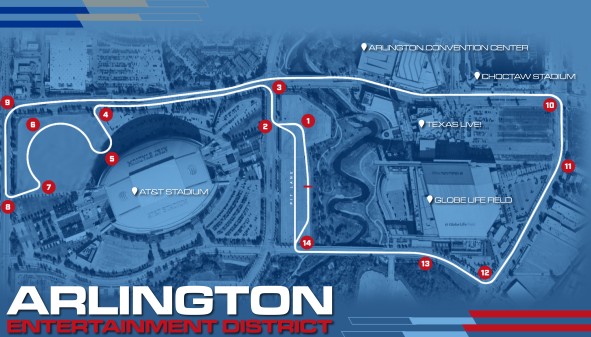
The Grand Prix of Arlington – track overview
Photo Credit: Arlington CVB
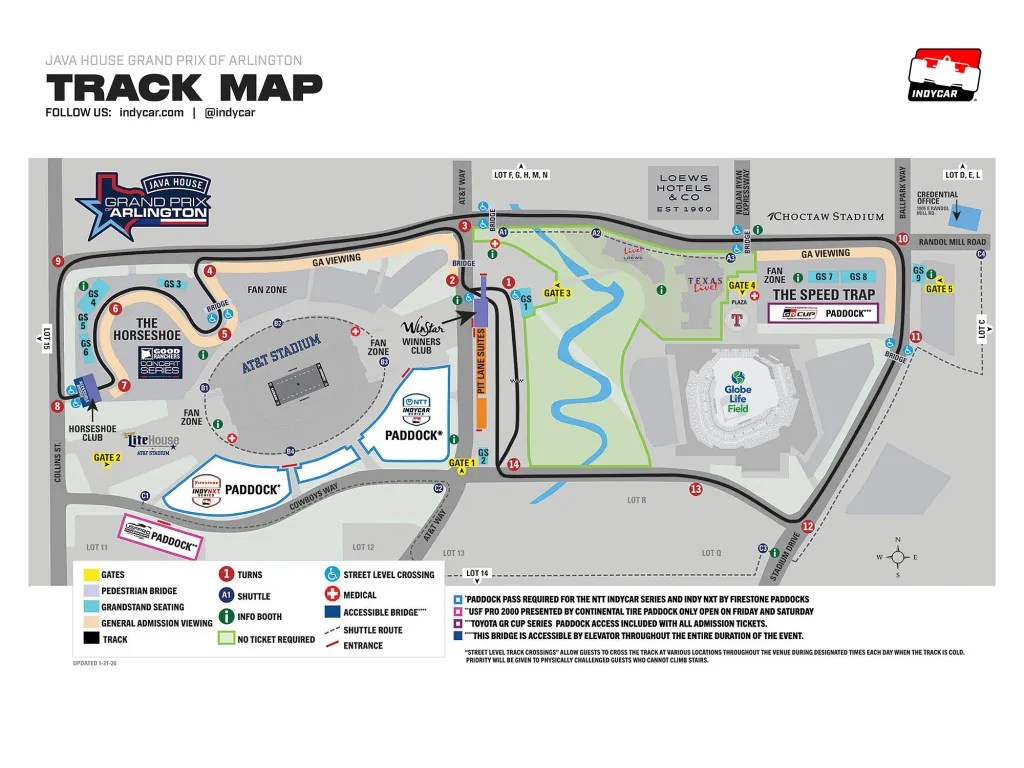
A more detailed look at the track map
Photo Credit: IndyCar
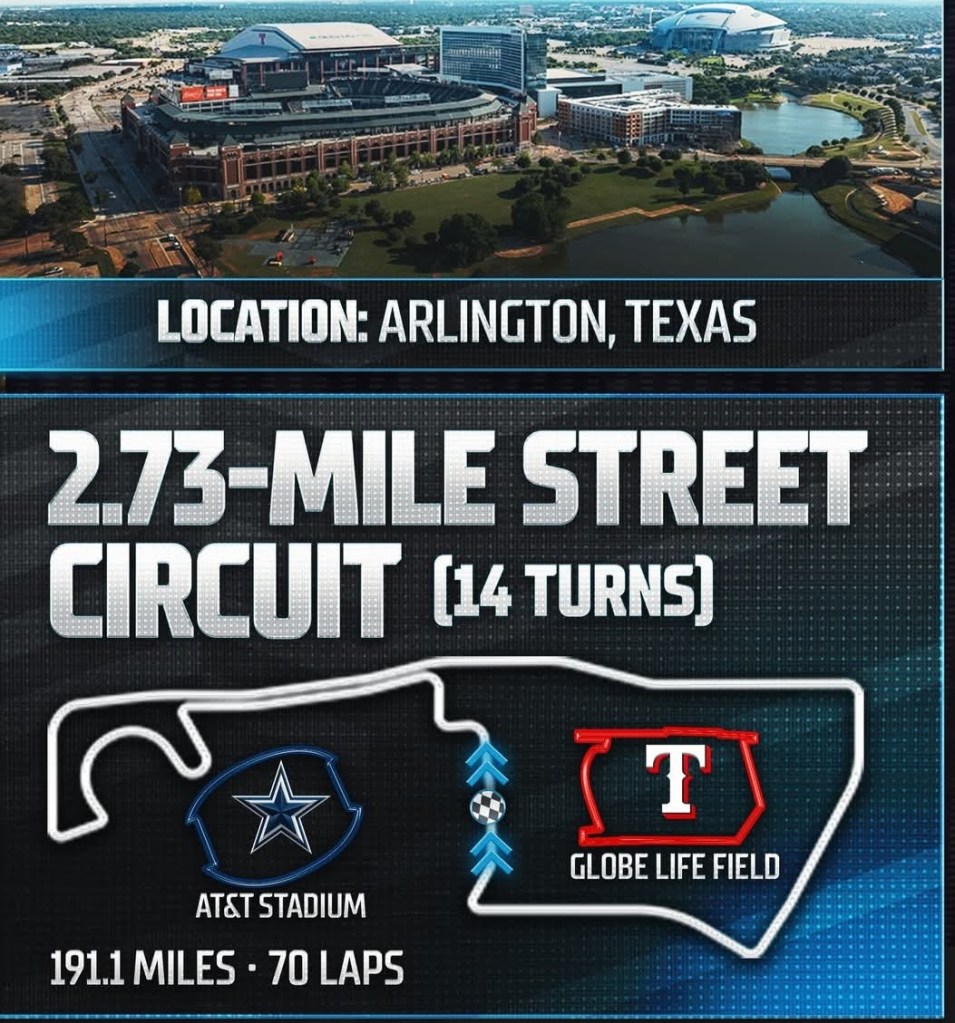
Sunday’s 70-lap race covered approximately 191 miles with a field of 25 drivers. Kyle Kirkwood, driving for Andretti Global, took the lead with 15 laps to go to secure the win. Andretti accounted for three of the top four finishers. Street circuits demand more technical precision than ovals, and the tight turns around the stadiums provided plenty of drama.
Most drivers and spectators were impressed, though some noted the surface was bumpy in places. (They should have seen the roads a few months ago!) However, many racing purists argue that these imperfections allow drivers to truly showcase their skills. The grandstands were sold out for Sunday, with officials reporting ticket sales from all 50 states and 20 countries. While 80,000 is a significant crowd, it is worth noting that it is still fewer than the number of fans who attend a typical Dallas Cowboys game at AT&T Stadium.
Warm weather and mostly clear skies were a blessing, though wind gusts on Sunday reached 40–50 mph, prompting an earlier start time and the cancellation of a post-race concert. Despite the wind, the festive environment remained intact through Fan Zones. There were also racing-themed exhibits at the Arlington Museum of Art and UTA Special Collections. Outside the Entertainment District, the “Downtown Pit Stop” offered family-friendly experiences and racing-themed deals at local restaurants.
Race Promo with Arlington skyline
Many hope the Grand Prix will become an annual event, though future dates haven’t been finalized. While some residents weren’t fans of the noise and road closures, the economic impact is expected to be substantial. Currently, IndyCar ranks as the third most popular motorsport in the U.S. (behind Formula 1 and NASCAR), but it maintains a large, loyal fanbase anchored by the legendary Indianapolis 500 held annually on Memorial Day weekend.
Watching the highlights online, the course looked impressive in aerial shots; it was exciting to recognize local landmarks along the track and in the surrounding area. The Java House Grand Prix of Arlington proved, yet again, that our city can handle world-class events. While the IndyCar races were exciting, anticipation is now building for this summer when Arlington hosts nine World Cup soccer games at AT&T Stadium—the most of any host city in this year’s tournament.
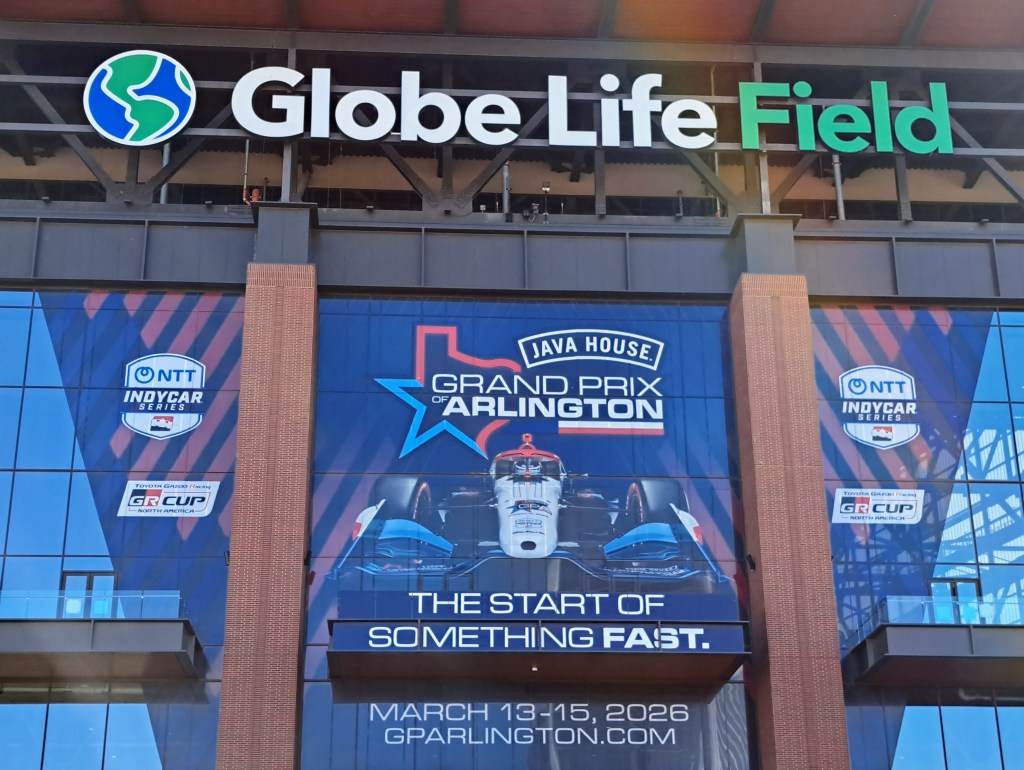
Race promo at Globe Life Field
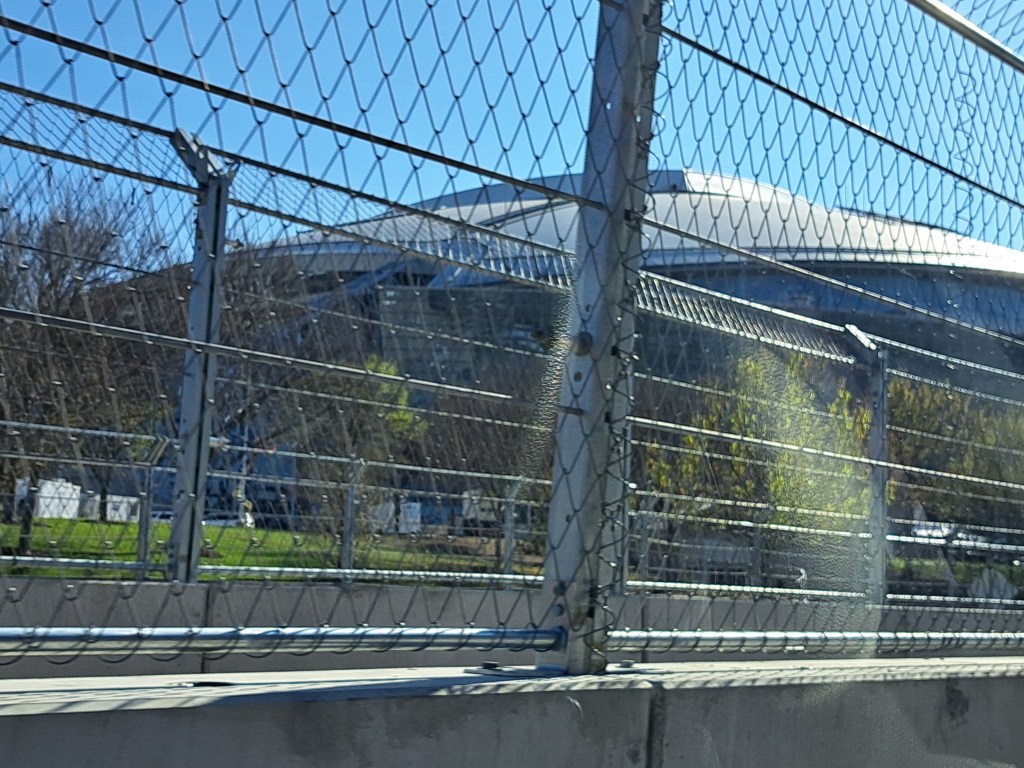
View of AT&T Stadium from the track, the weekend before
Though known mostly for professional football and baseball today, Arlington is no stranger to racing. Arlington Downs featured horse racing from 1929 to 1937, with the track later used for auto racing in the ’40s and ’50s. The city’s racing icons include open-wheel racer Jimmy McElreath (1928–2017), drag racer Lee Shepherd (1944–1985), and Kebin Kinsley, who famously races on both land and water.
Race Highlights | 2026 INDYCAR at Arlington
NTT INDYCAR SERIES YouTube Channel
Blog post by Jason S. Sullivan, 03-18-26
 Jason S. Sullivan