Medal of Honor
“The President of the United States, on behalf of Congress, awards the Medal of Honor to members of the United States Armed Forces who distinguish themselves “by gallantry and intrepidity at the risk of his or her life above and beyond the call of duty.” Eligibility for this prestigious recognition is based on acts of valor in combat. A declaration of war is not required. More than 40 million people have served in the United States Armed Forces since the Civil War. Fewer than 4,000 have been awarded the Medal of Honor.“
—National Medal of Honor Museum
National Medal of Honor Museum
As the National Medal of Honor Museum prepares to open to the public on March 25 in Arlington, it hosted a free community preview event on March 17-18. Attending and being among the first to tour the museum was an honor. There was an enthusiastic turnout, with city officials, media, Veterans, and other supporters.
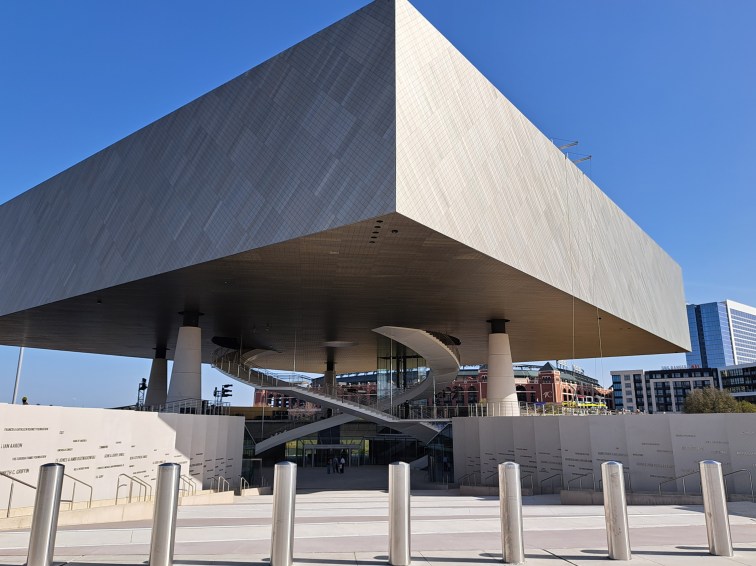
Exterior of the National Medal of Honor Museum, with Choctaw Stadium, One Rangers Way, and
Live by Loews in the background.
Community Exclusive: First Look
With architecture that is contemporary and quite stunning, the museum is an exciting addition to the Arlington skyline. The museum’s main section hovers 40 feet above the ground, with five, massive concrete pillars supporting it. Each represents a branch of the United States Armed Forces: Army, Navy, Air Force, Marines, and Coast Guard. There are over 100 stairs to get to the top, although an elevator is available, too. Immaculate landscaping and stylish features complement the museum’s attractive appearance.

National Medal of Honor – Arlington, Texas
Upon entering the museum, visitors watch an introductory film. The 8-minute immersive documentary features footage from recipients receiving the medal, combat footage, archival photos, quotes, brief stories, and reflections. The theater is 360 degrees, with seating in the middle; the film is projected floor to ceiling and features impressive audio and visuals.
One of the recipients in the film offers a unique perspective: “The Medal of Honor is an award that no one wants because it represents the worst day of your life.” Indeed, one receives the medal for valor, courage, and sacrifice during perilous, high-stress situations where mistakes can be costly.
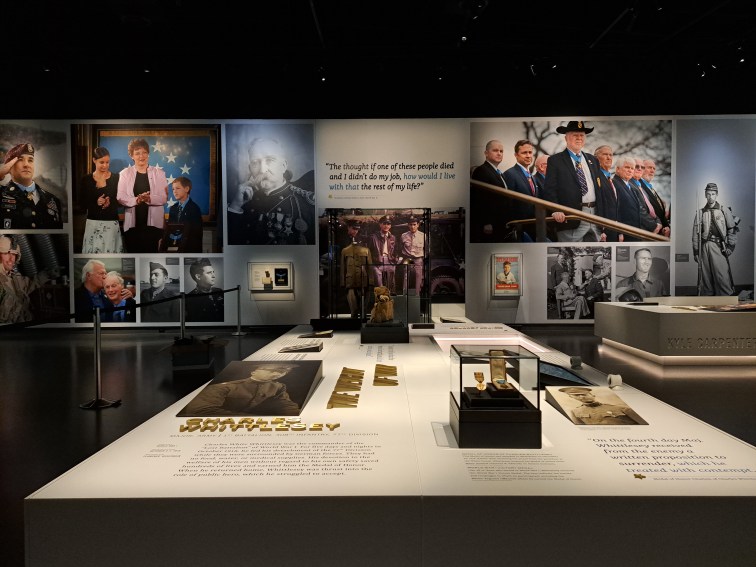
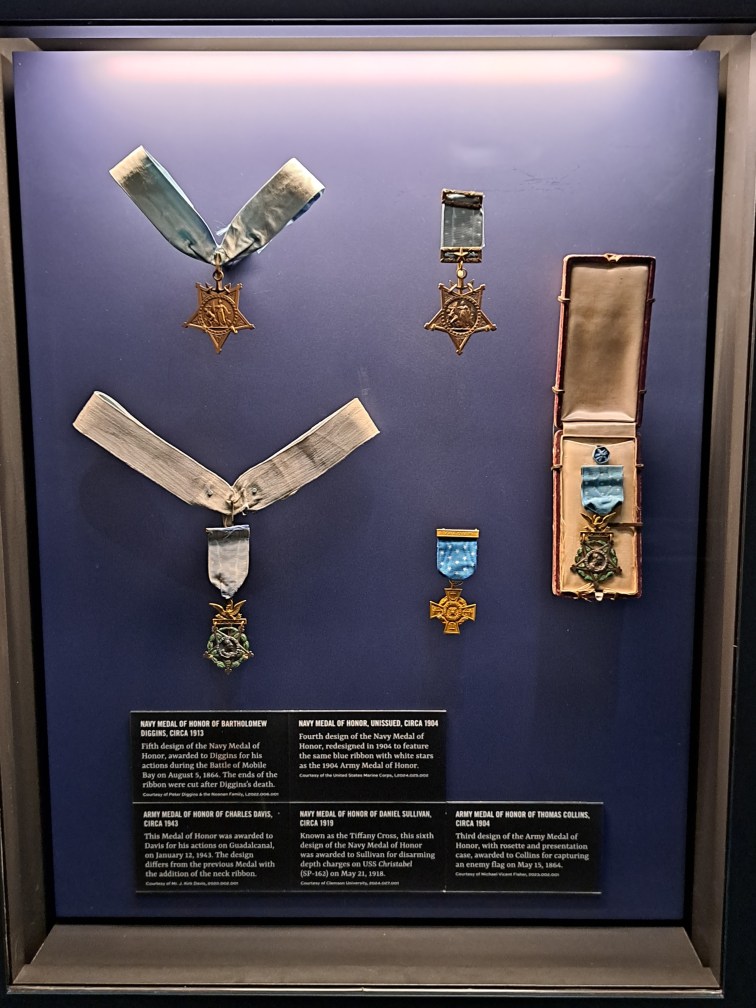
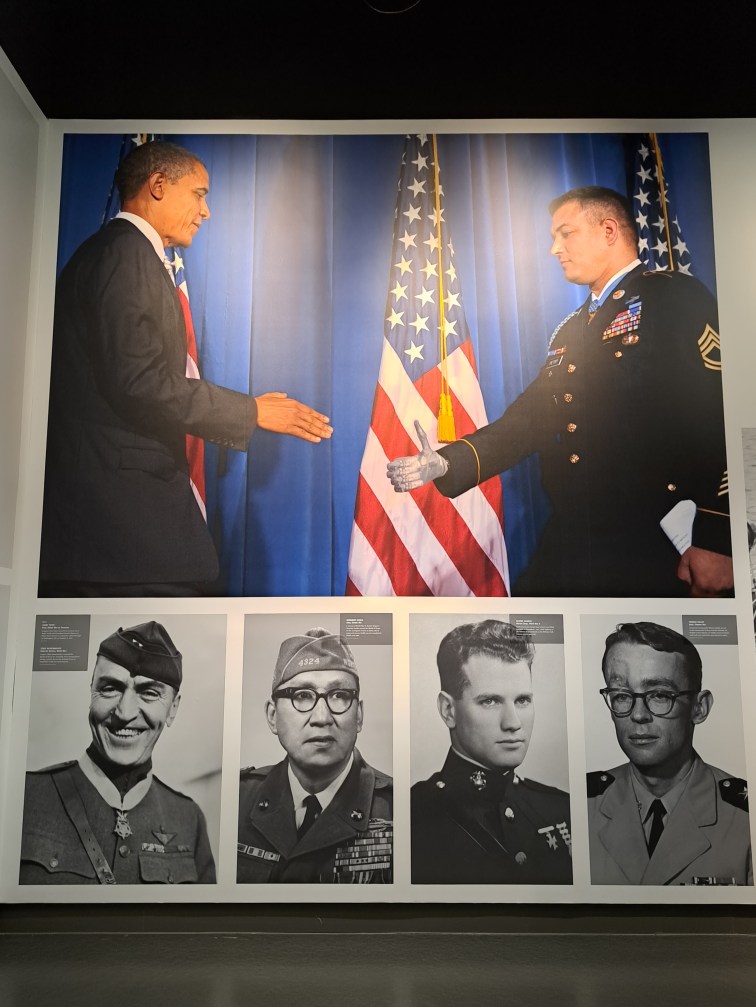
After exiting the theater, guests move into the large gallery area. Various exhibits—More than a Medal, Moments of Action, An Evolving Symbol, and From Rails to Rotors, among others—tell the stories of the Medal of Honor and some of its recipients.
At its core, the National Medal of Honor Museum is a biographical narrative, bringing recipients’ stories to life. Visitors will journey through their experiences via exhibits that include striking photographs, insightful text, interactive elements, videos, historical documents, and personal effects, all within the larger context of their lives. Curators were careful in presenting the stories—not shying away from war but not glorifying violence, promoting propaganda, or getting too political. It’s a challenging endeavor and a delicate balance.
Here is a slideshow with 18 photos from the exhibits. (Swipe or tap to view.)
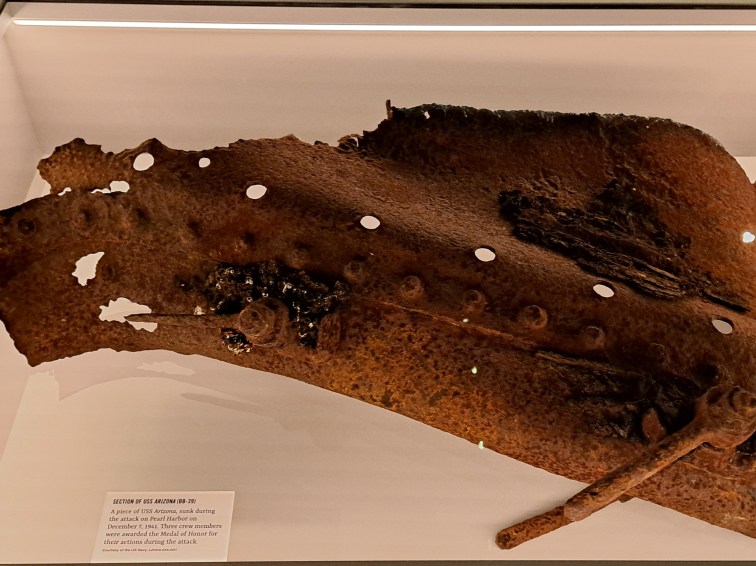
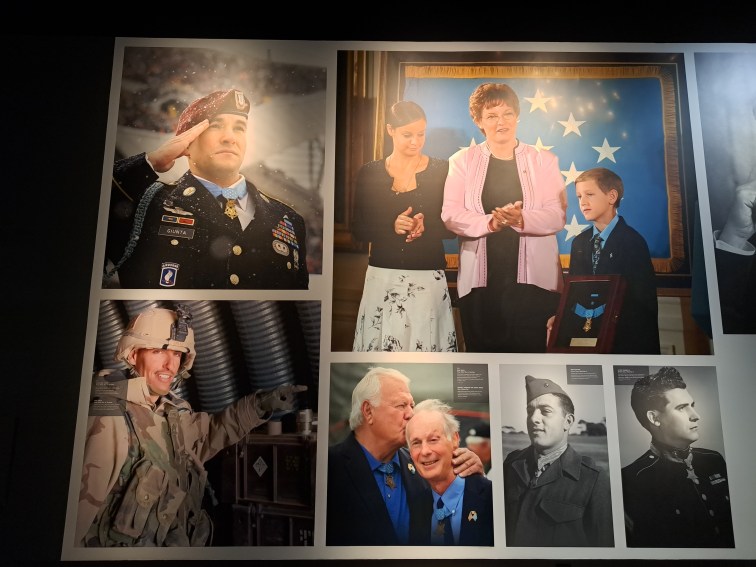

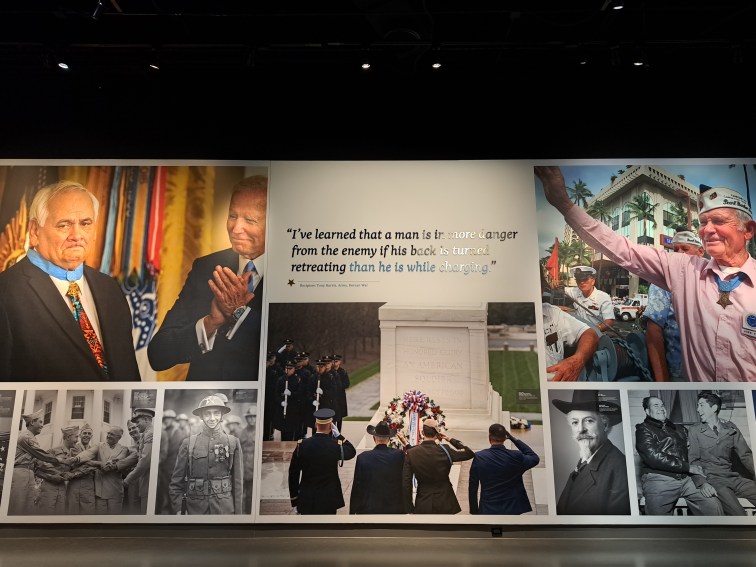
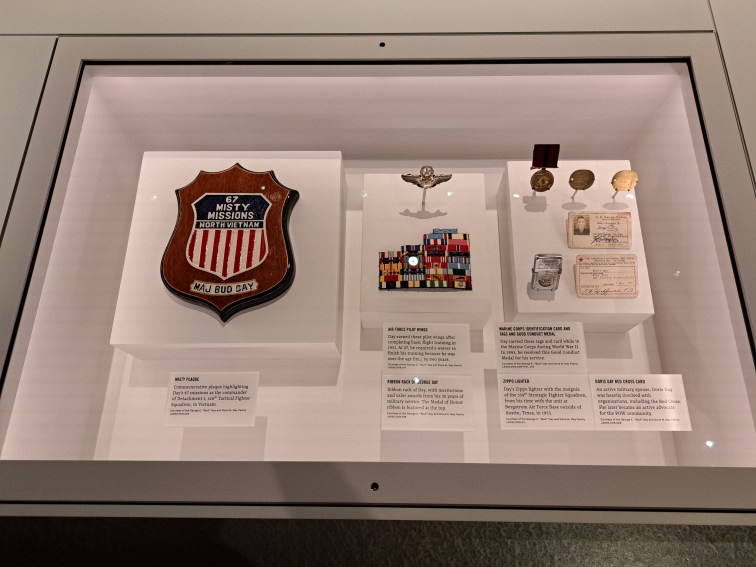


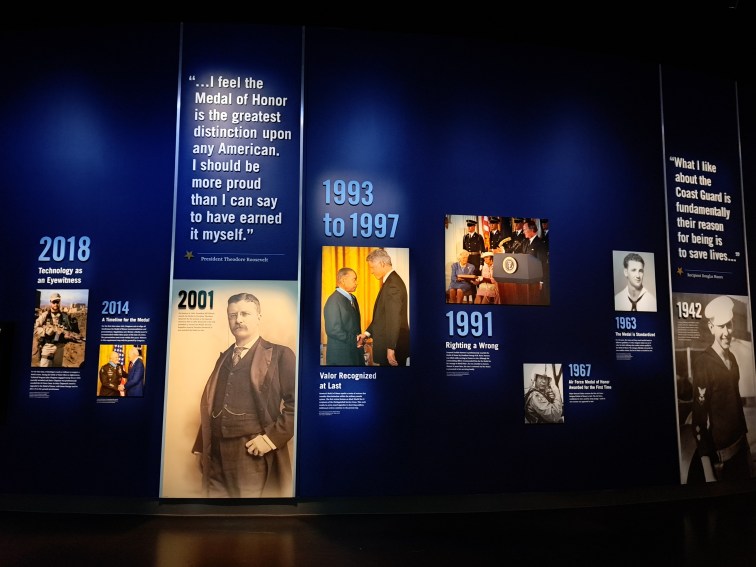

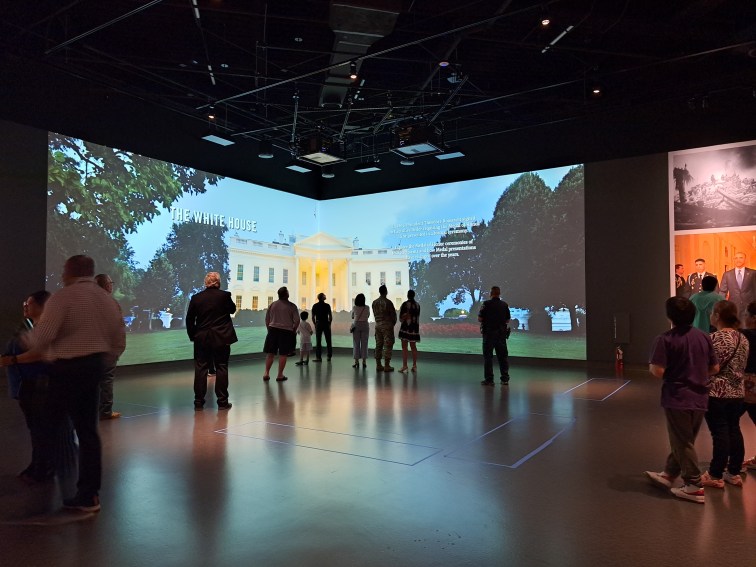


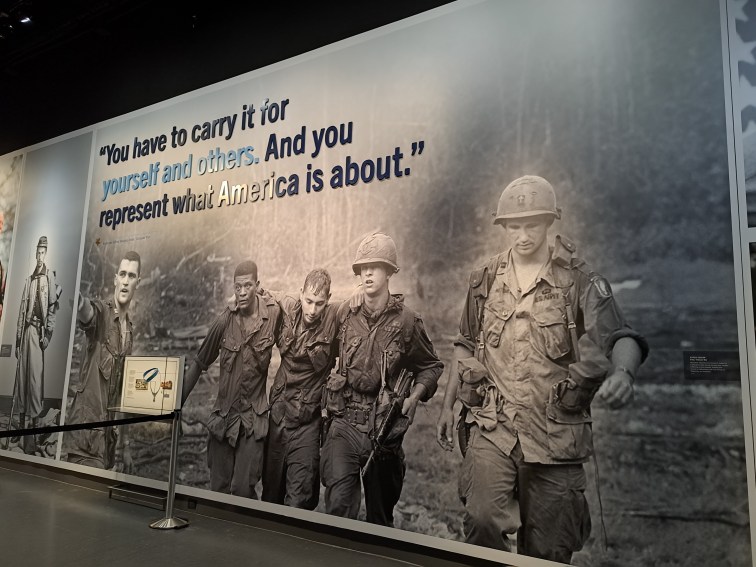


The most prominent item displayed was a restored helicopter—a Bell UH-1H Iroquois, commonly known as the “Huey”—often associated with the Vietnam War. The stories and photos are captivating, but the helicopter was my favorite part, as it was visually stunning and helped put everything into perspective. It was a popular exhibit, and many people wanted to see it.

Although a bit deceiving from this photo, the helicopter is 41 feet long and nearly 15 feet high. It could carry thirteen people while traveling up to 138 MPH. Known for being versatile and nimble, the helicopter was used for troop transport, gunship, and medical evacuation.
I had hoped to see an exhibit about hometown hero Neel Kearby, who received the Medal of Honor during World War II. If there was an exhibit about him, I didn’t see it, although he is honored with a theater inside the museum. In hindsight, there may have been an exhibit about him there.
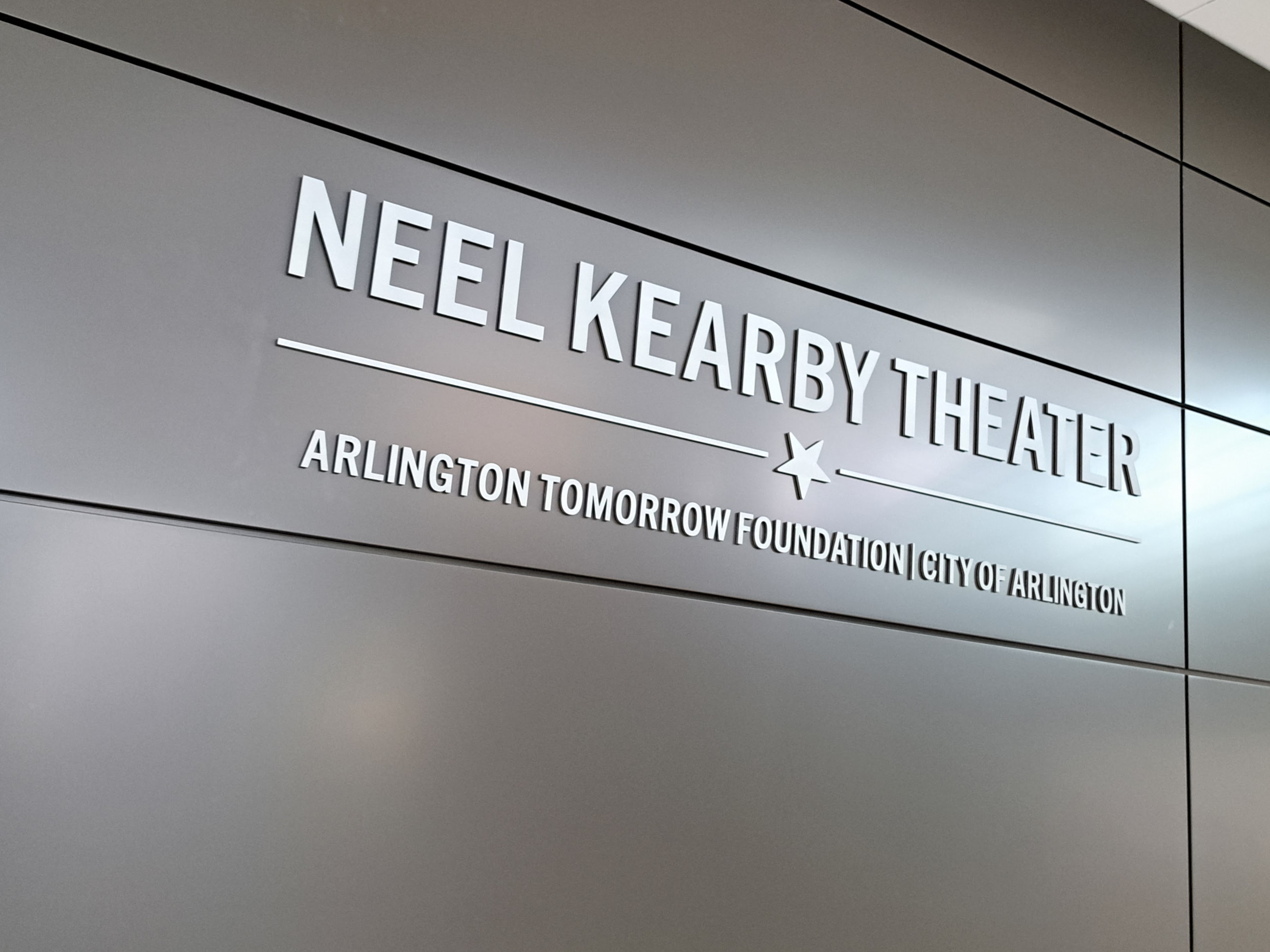
Exterior of the Neel Kearby Theater
One quibble for me is that despite different exhibits and areas, there wasn’t a map or resource (as far as I could tell) to locate a specific recipient. The museum staff helped answer questions and guide visitors, but understandably, they were still learning the layout and contents. However, the museum tends to focus more on the collective Medal of Honor experience, and not that of specific recipients.
Nonetheless, with over 3,500 Medal of Honor recipients, the museum can only showcase a small percentage at once. There will be rotating exhibits to eventually include stories about all recipients. The museum’s website offers a searchable database with more information as an additional resource.
The National Medal of Honor Museum is respectful, impactful, and of the highest caliber. This is an exceptional, world-class museum—one that is patriotic, purposeful, powerful, and poignant—filled with inspirational stories of courage and valor. Arlington is honored to host this museum, and it will be a tremendous community asset for decades. Expect it to attract visitors and recognition nationwide.
Grand Opening
The National Medal of Honor Museum held its Grand Opening on March 22. It was a spectacular evening with a black-tie VIP event and ribbon cutting. For those attending from the community, there were speeches, live music, fireworks, a drone show, and interactive exhibits. Attending dignitaries include President George W. Bush, Texas Governor Greg Abbott, and many others, along with 30 of the 61 living Medal of Honor recipients. Numerous Veterans attended, as did actor and activist Gary Sinise, whose foundation tirelessly supports military personnel. Media, celebrities, local partners, donors, and thousands from the community shared in the momentous occasion.
The museum opens to the public on March 25, National Medal of Honor Day.
Blog post by Jason S. Sullivan, 03-23-25
 Jason S. Sullivan