
The 48StateTour is a gravestone preservation workshop. The 2024 tour runs from May 28th through August 16th and includes 56 stops in the lower 48 states. A professional videographer traveled with the tour and plans to make a documentary.
48StateTour – Saving America’s Graveyards
Note: This post will look better on a laptop than on a cell phone.
48StateTour
The event came to Johnson Station Cemetery in Arlington on June 19th. My wife and I attended the event, along with about 70 other people. It was one of the largest crowds on this year’s tour. While most people were local, and a few even had family buried there, some came from over 100 miles away. The Tarrant County Historical Commission and the Lucretia Council Cochran Chapter of NSDAR served as event organizers.
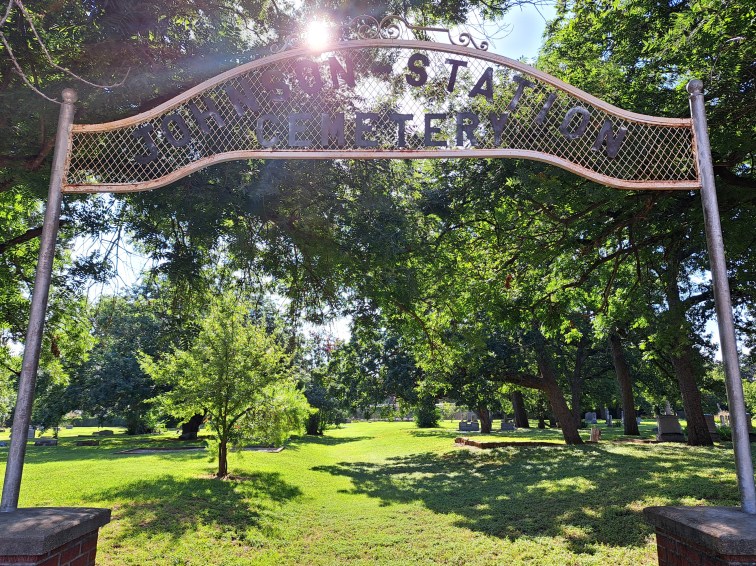
Johnson Station Cemetery
Jonathan Appell from Connecticut runs the 48StateTour, now in its fifth year. Jon started as a gravedigger but has expanded to a “Jon of all trades” of cemetery preservation. His skill set includes masonry, installation, cleaning, repairing, restoration, excavating, and more. He has sought specialized training to become an expert on cemetery preservation. Besides being the CEO of Atlas Preservation, he also serves as a consultant and gives training workshops. Jon is knowledgeable and passionate about his work.
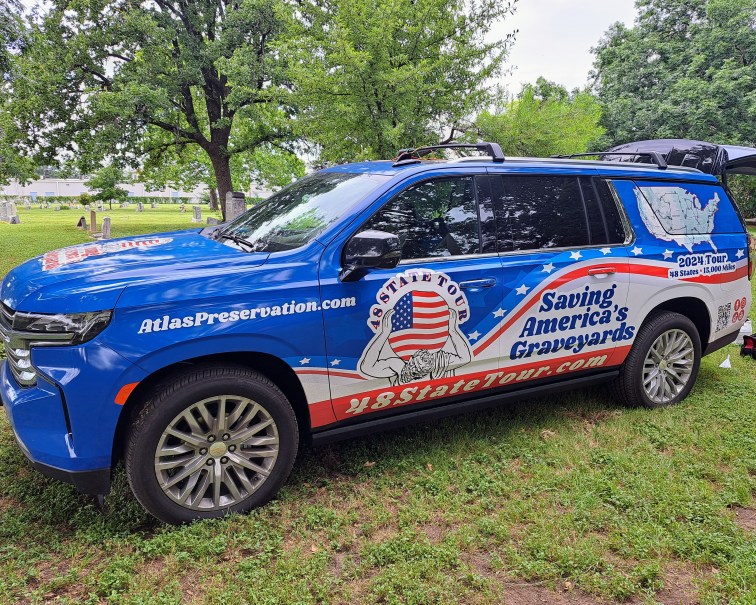
It takes an SUV full of supplies and equipment to make the tour happen
The event included a cemetery tour and steps to clean, repair, and raise a fallen stone. There were plenty of hands-on opportunities for folks to get involved.
Cemetery Tour
While the hands-on opportunities were the main reason we were there, the tour was my favorite part. It included an overview of cemeteries and specific observations for Johnson Station Cemetery.
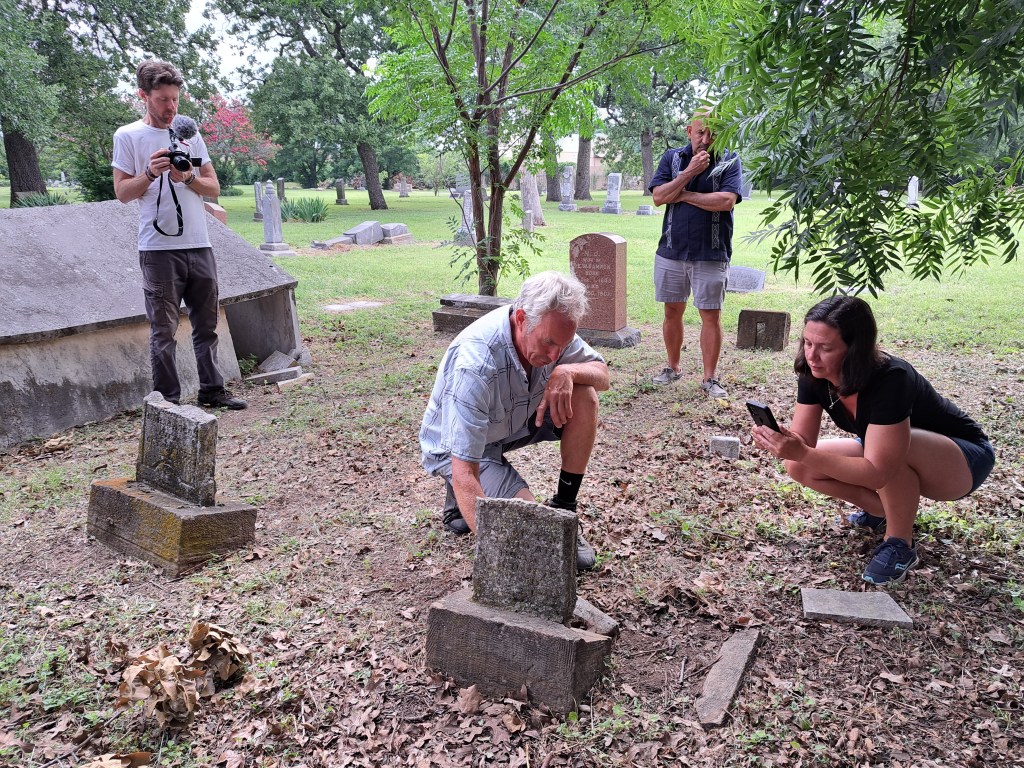

Jon Appell giving a tour of the cemetery
Here are some of my tour notes, albeit jagged and random:
- Monument and cemetery materials were often locally sourced, especially the lower bases.
- Many older headstones were hand-stamped.
- Pins, rods, dowels, or other bonding materials often hold monuments together.
- The Industrial Revolution brought on larger and more elaborate monuments.
- Overcrowding in cemeteries became an issue, especially in large cities.
- In the 1830s, cemeteries shifted to more rural areas, a trend known as the “Garden Cemetery Movement.” Cemeteries soon had art, trees, flowers, and landscaping to entice the living to visit.
- Cemeteries used to be more like modern-day city parks. It was common for folks to visit, stroll, picnic, and stay awhile in the pastoral atmosphere.
- Graves near the entrance are usually the most well-kept and coveted.
- Symbolism is prevalent on headstones.
- Stones can be disrupted by time, soil erosion, tree rot, weather, storms, animals, and vandalism.
Jon noted that most stones were in decent condition, although some needed cleaning or resetting. Some people used braces, scrap metal, signposts, or wood to prop up fallen stones with the best intentions. Jon referred to these as the “kitchen sink” method.
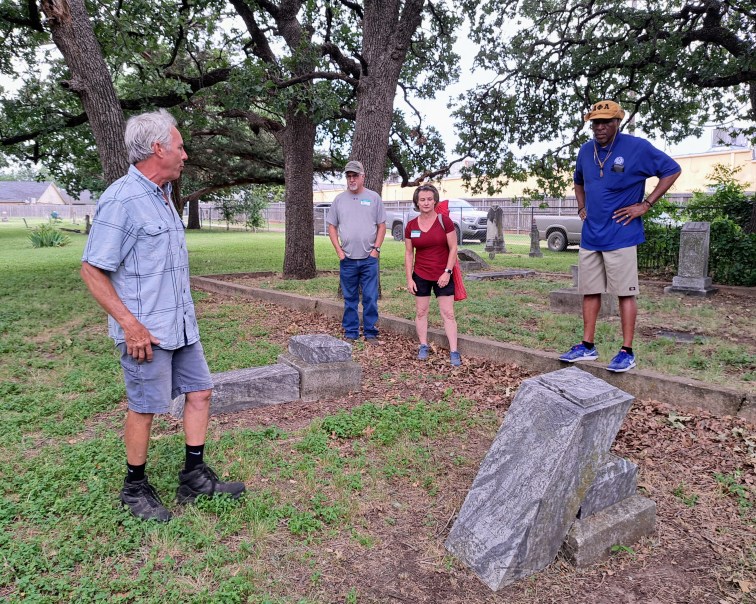
Jon Appell giving a tour of the cemetery
Cleaning
Gravestone cleaning is the easiest way to get involved with cemetery preservation. More than aesthetics, cleaning helps preserve the stones, removing biological growth such as algae, lichen, or moss. “D/2” is often used as the cleaner, as it safely and effectively removes harmful biological and air pollutants. A water supply is also needed, whether from a plastic jug, spray bottle, or hose.
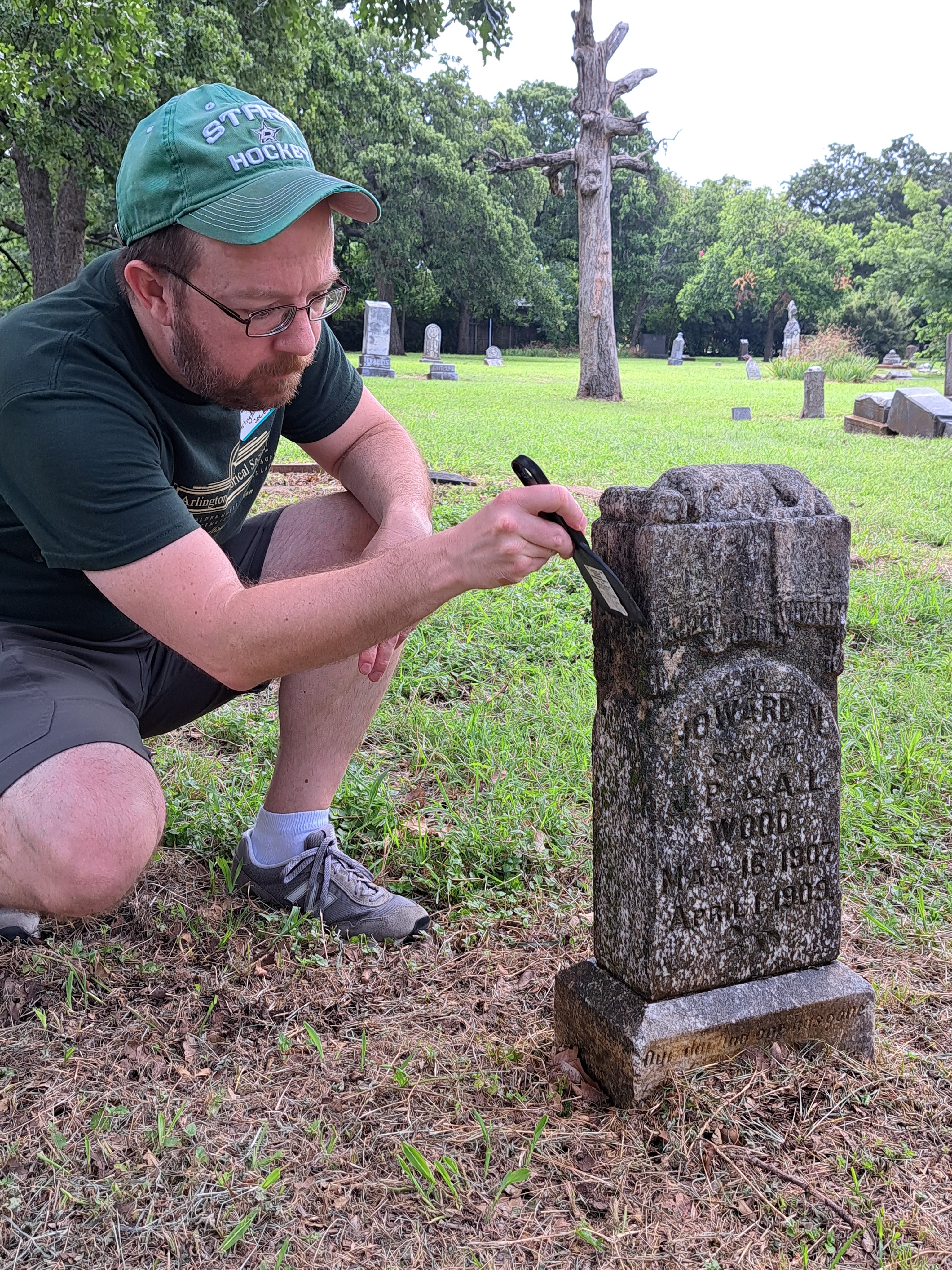
Yours truly cleaning a headstone
To clean, spray D/2 onto the stone and let it sit for 15 minutes. (The solution costs about $45 a gallon, so use it in moderation.) Then, gently scrub the stone with a soft nylon or natural bristle brush. Keep the brush wet to avoid damaging the stone. You can also use a plastic paint scraper or plastic putty knife to remove growth. Tools should be flexible and non-abrasive.
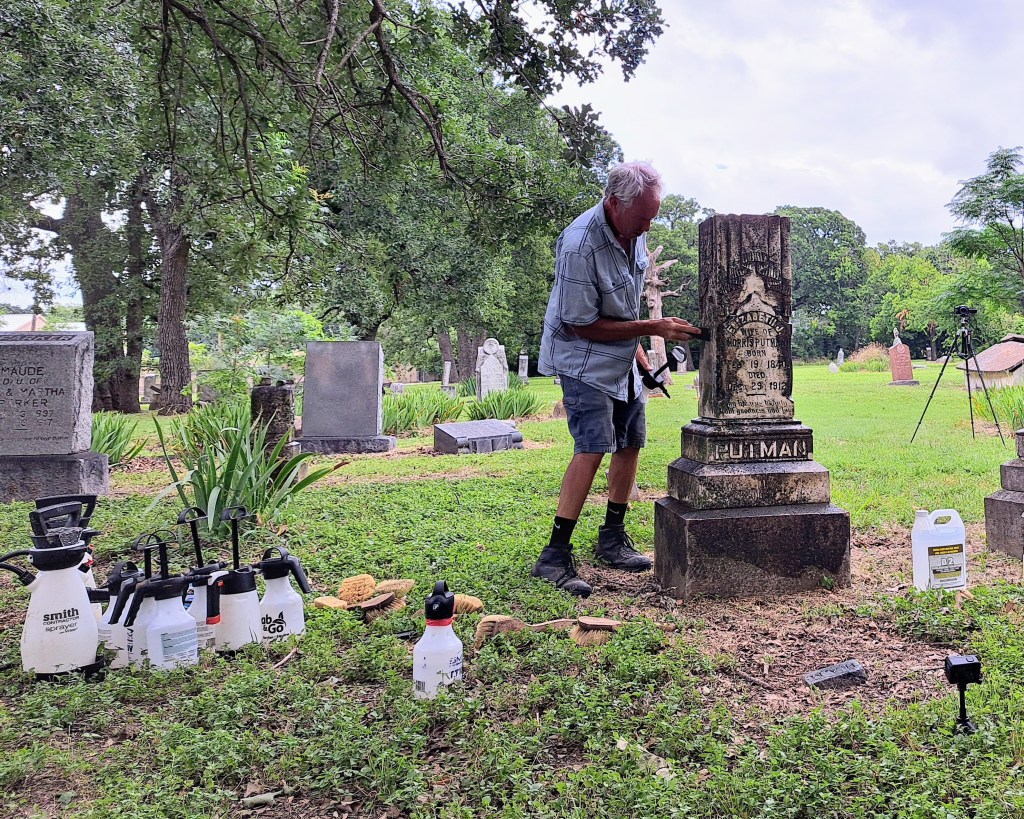
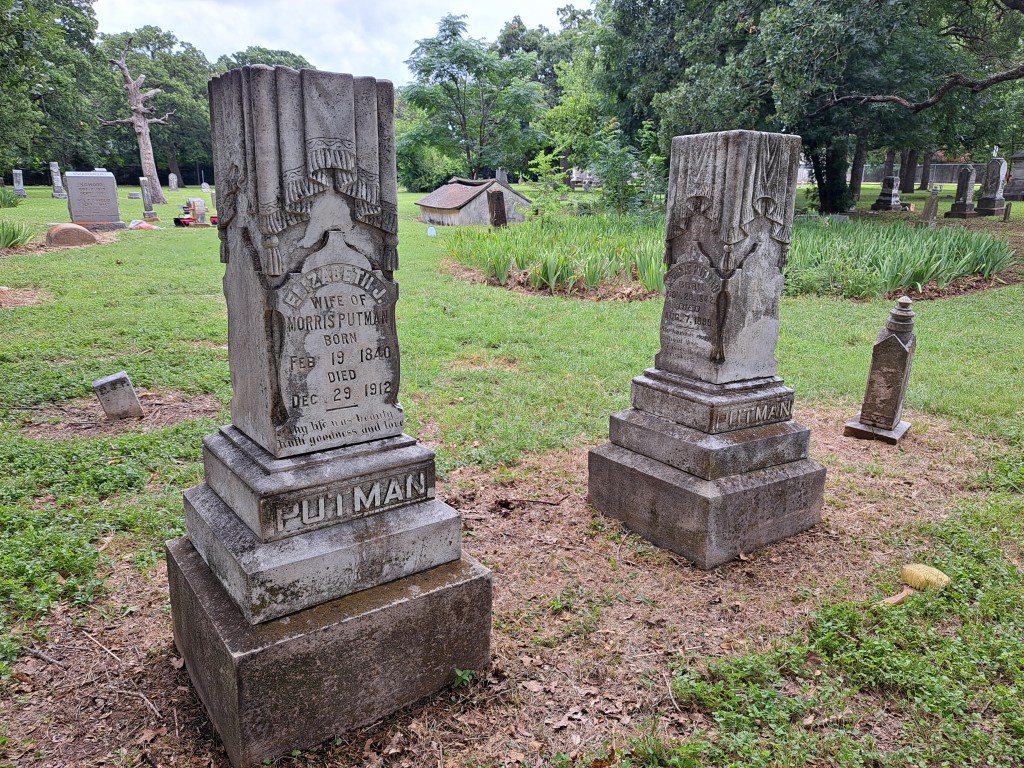
Jon Appell demonstrated how to clean a headstone — before and after, for comparison
The stone is like a sponge, and the D/2 will continue working after application. The results aren’t always immediate, although sometimes they are, and the product does most of the work. Applications every six months or so can serve as preventative maintenance. Stones will never look “brand new,” so don’t aim for that result. Easy does it. Scrubbing too hard can damage the stone.
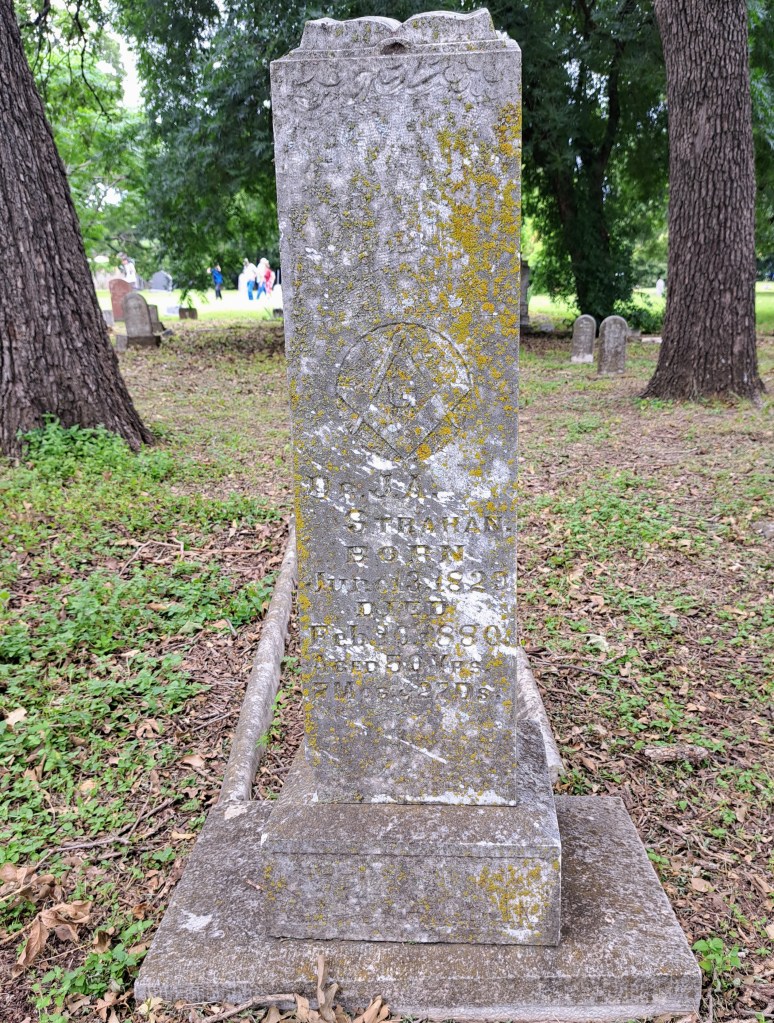
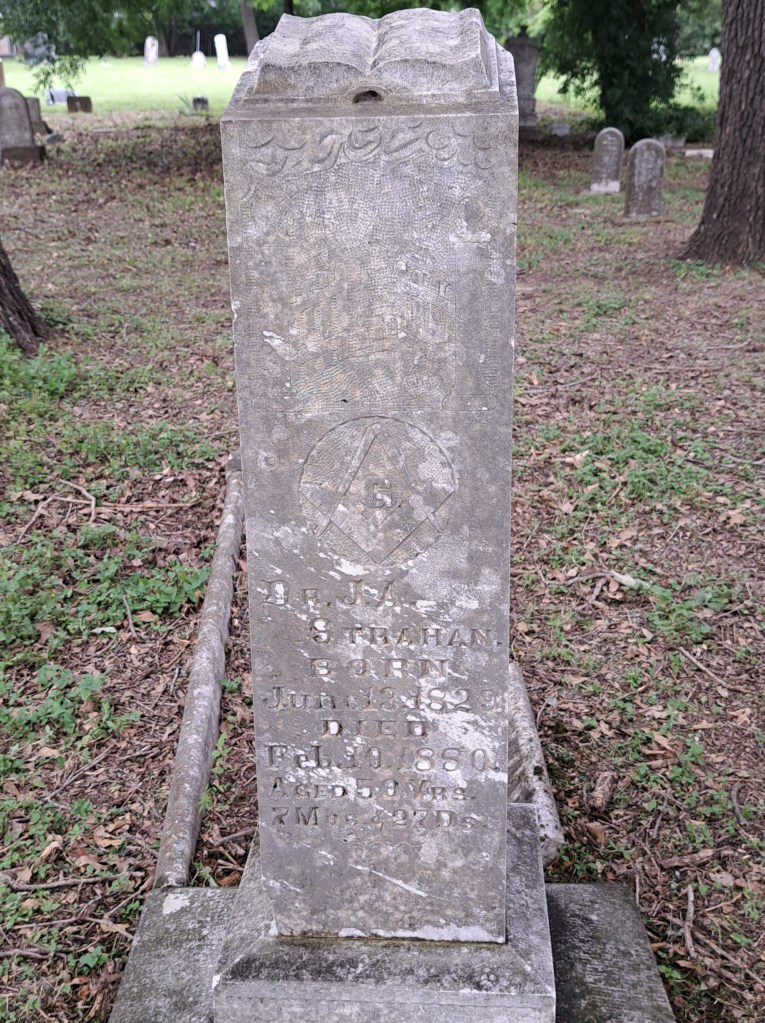
Jennifer and I worked on this headstone; before and after photos (front)
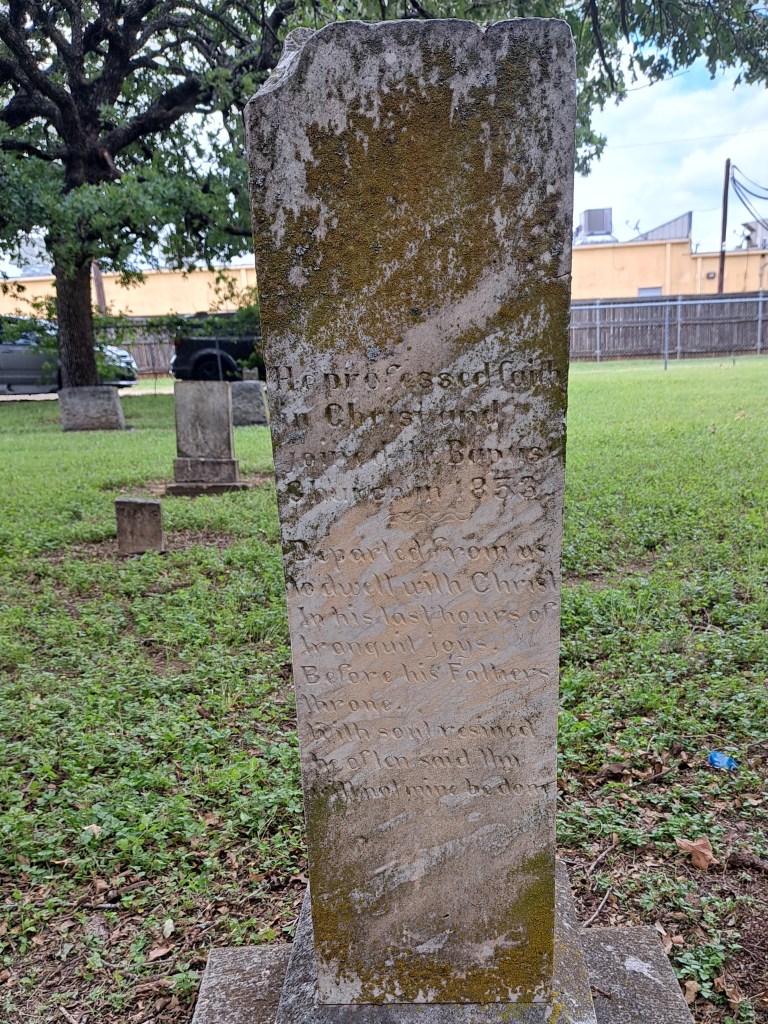
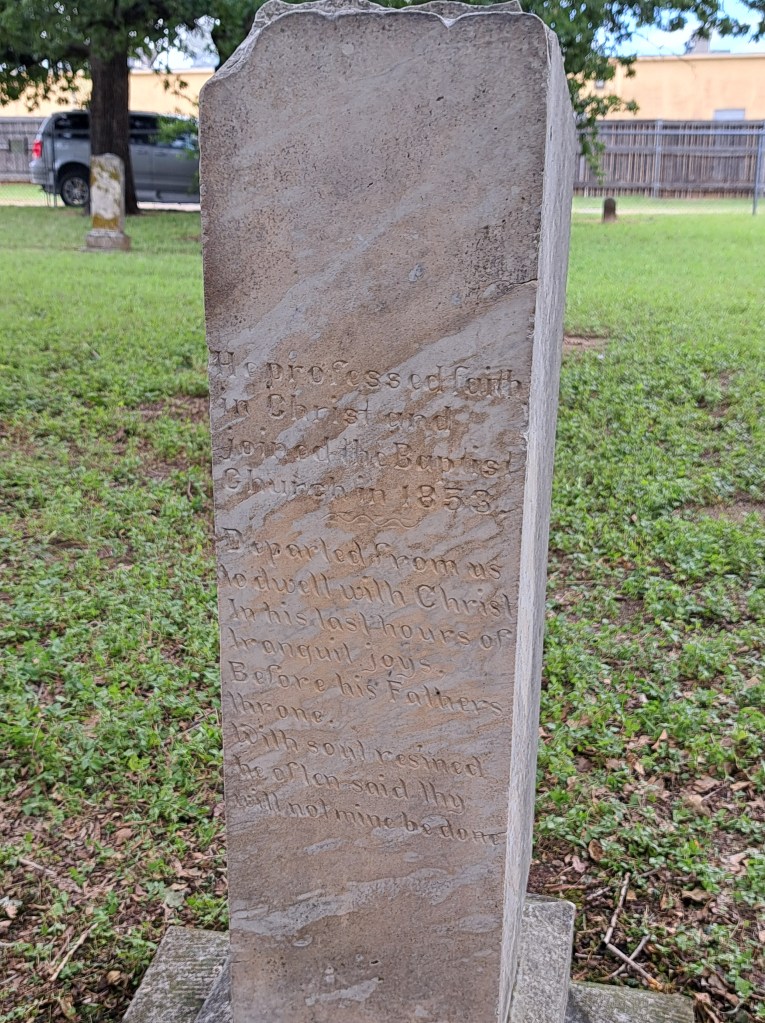
Jennifer and I worked on this headstone; before and after photos (back)
Repairing
I only took a few notes for repairing stones, as it’s not something that I would likely attempt. But it was fascinating to watch. Repairing fractured tablets is the easiest way to get involved. You can do many repairs and re-settings without heavy equipment or immense strength. Jon demonstrated a few examples and made it look easy; attendees helped under his guidance. A homemade tripod hoist, sturdy pulley system, tarps, and nylon straps can often get the job done. Seek permission before starting on larger projects.
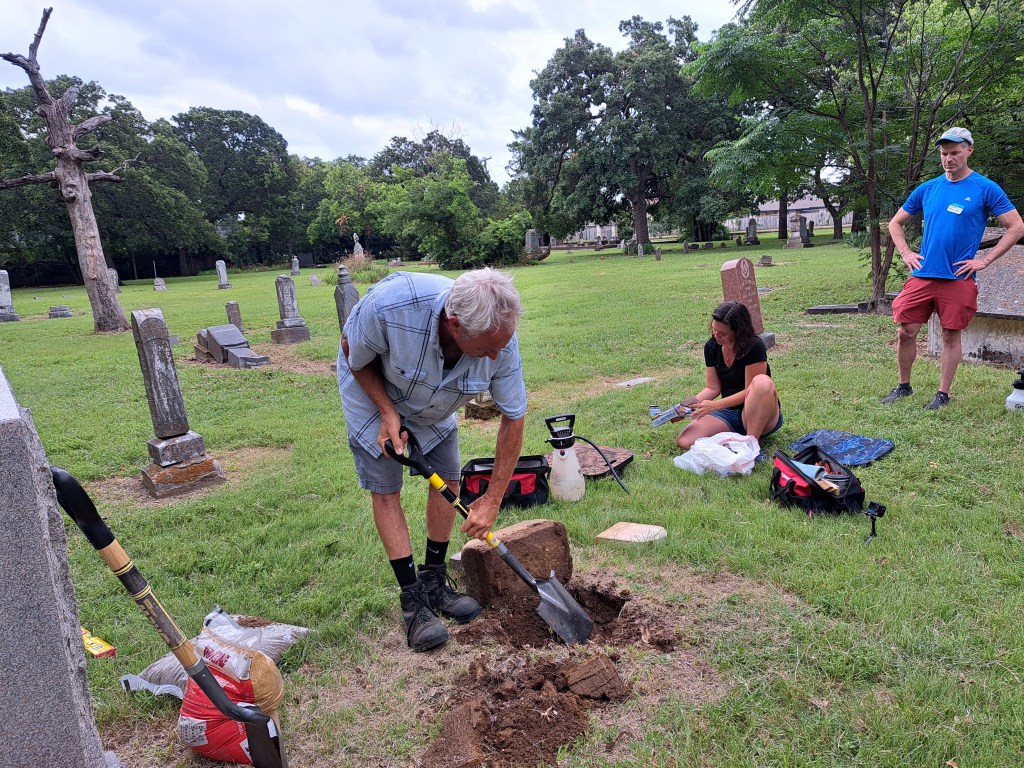
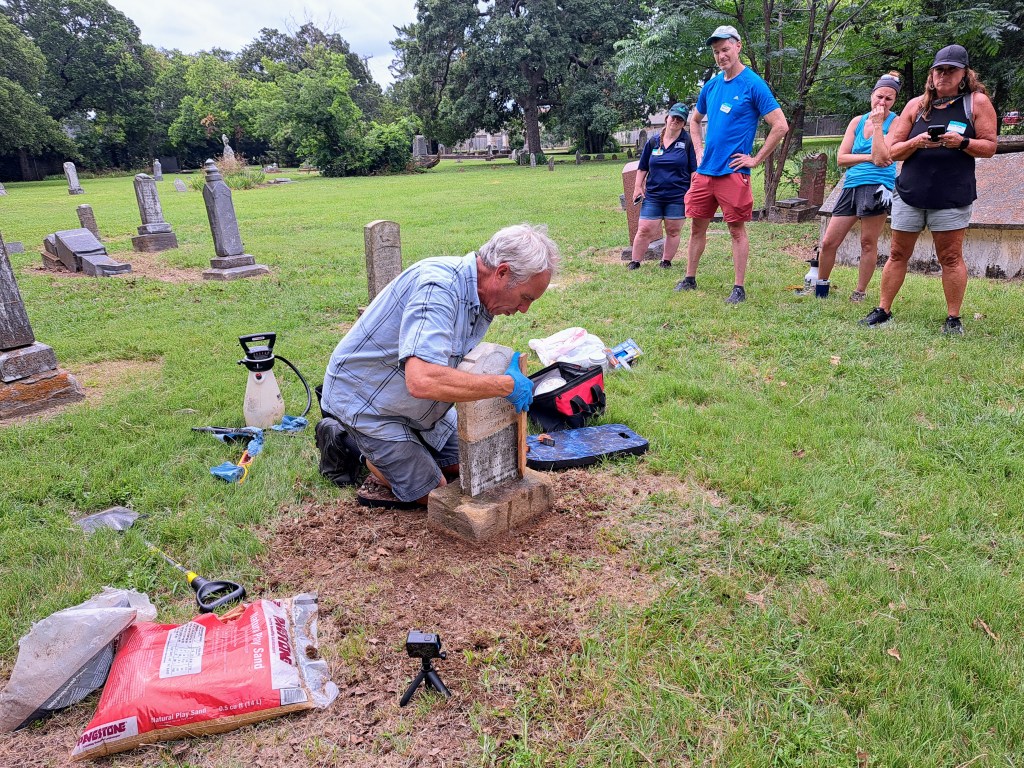
Jon Appell demonstrates how to repair a fractured tablet
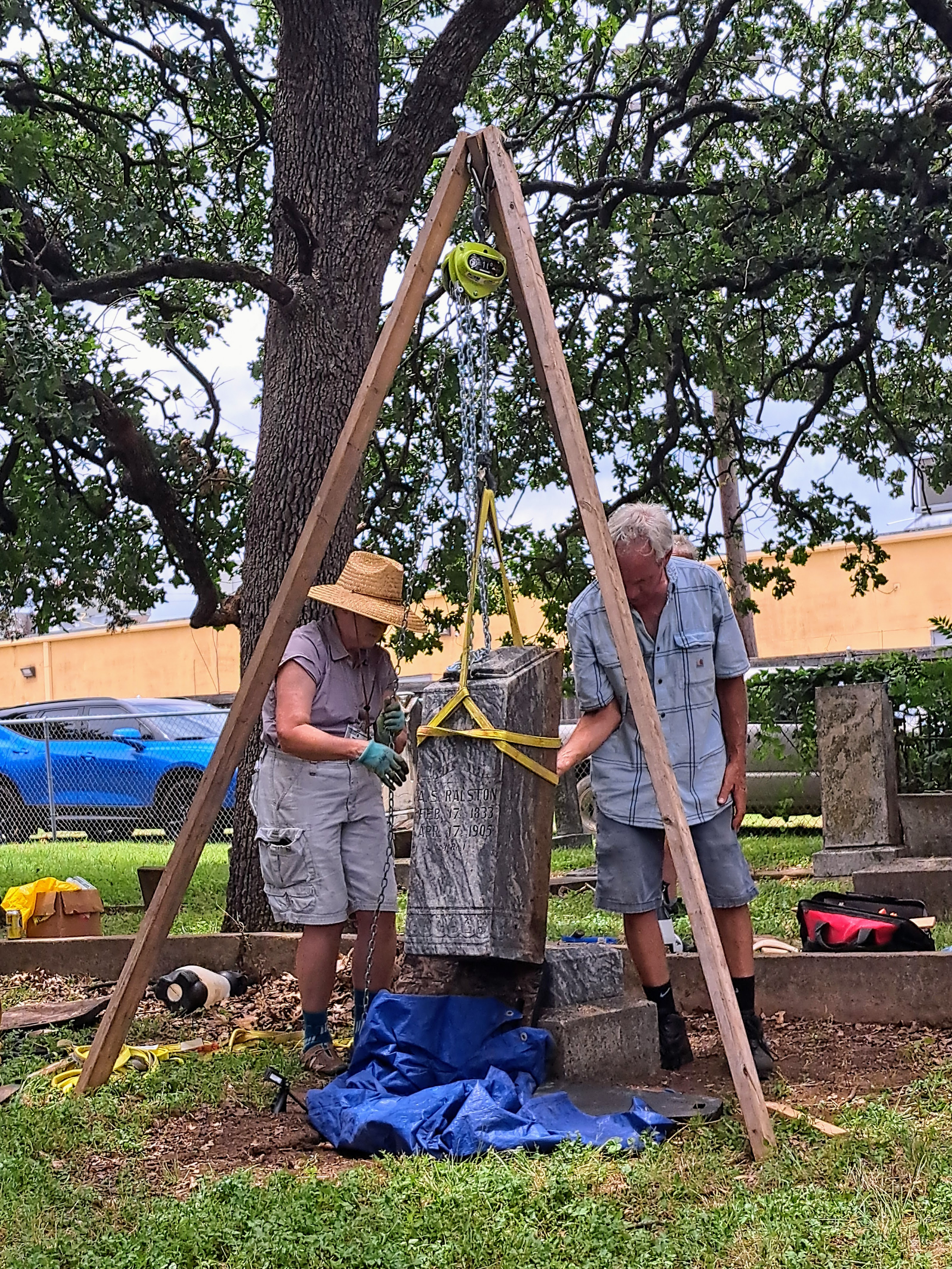
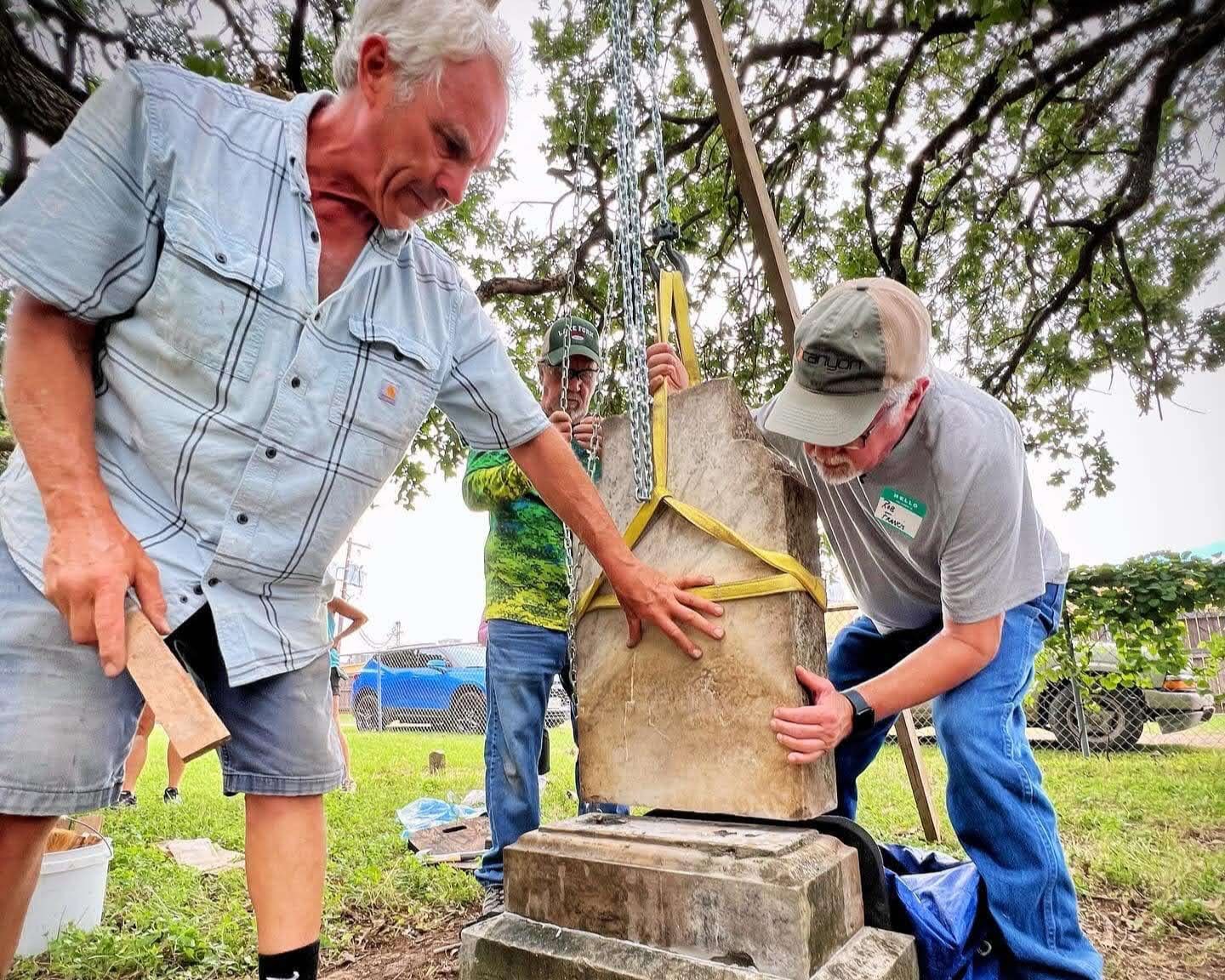
Jon Appell demonstrates how to reset fallen stones
Photo Credits: 48StateTour and Atlas Preservation
Final Thoughts
Throughout the day, attendees cleaned, repaired, or reset several stones. Towards the end, the videographer interviewed Jon for final thoughts. Jon stated that it was a productive day with many people getting involved, which is the purpose of the 48StateTour. Despite the warm temps, there was a great turnout and a sense of community.
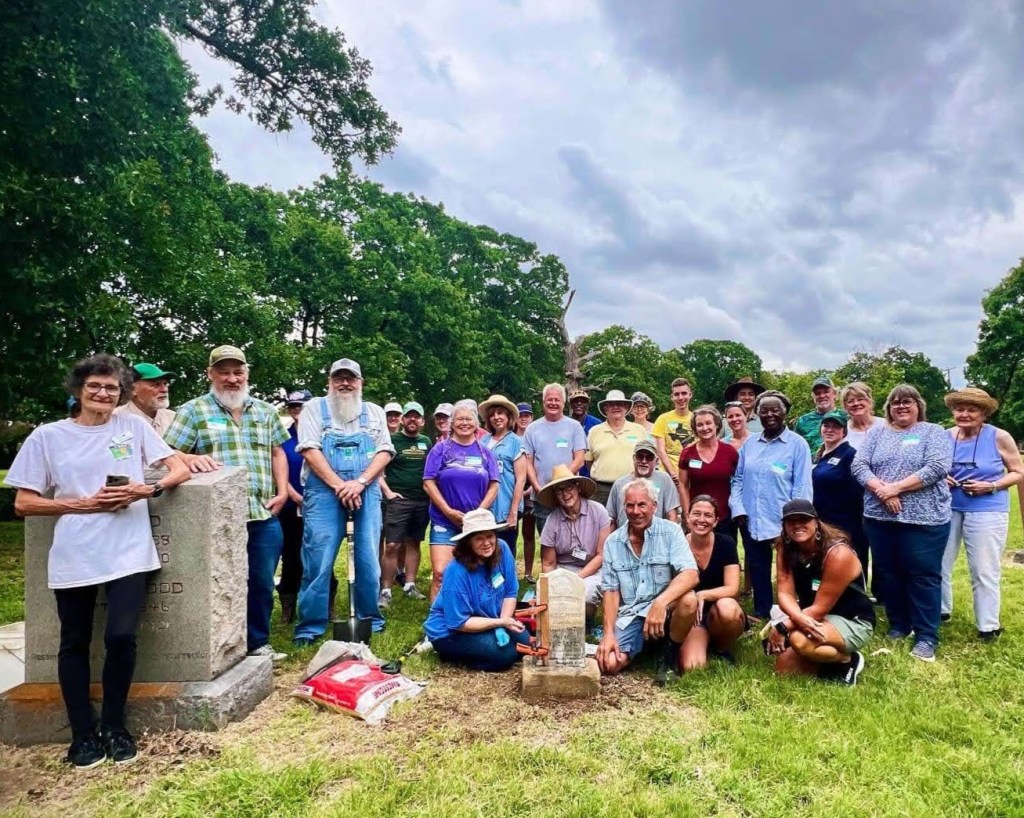
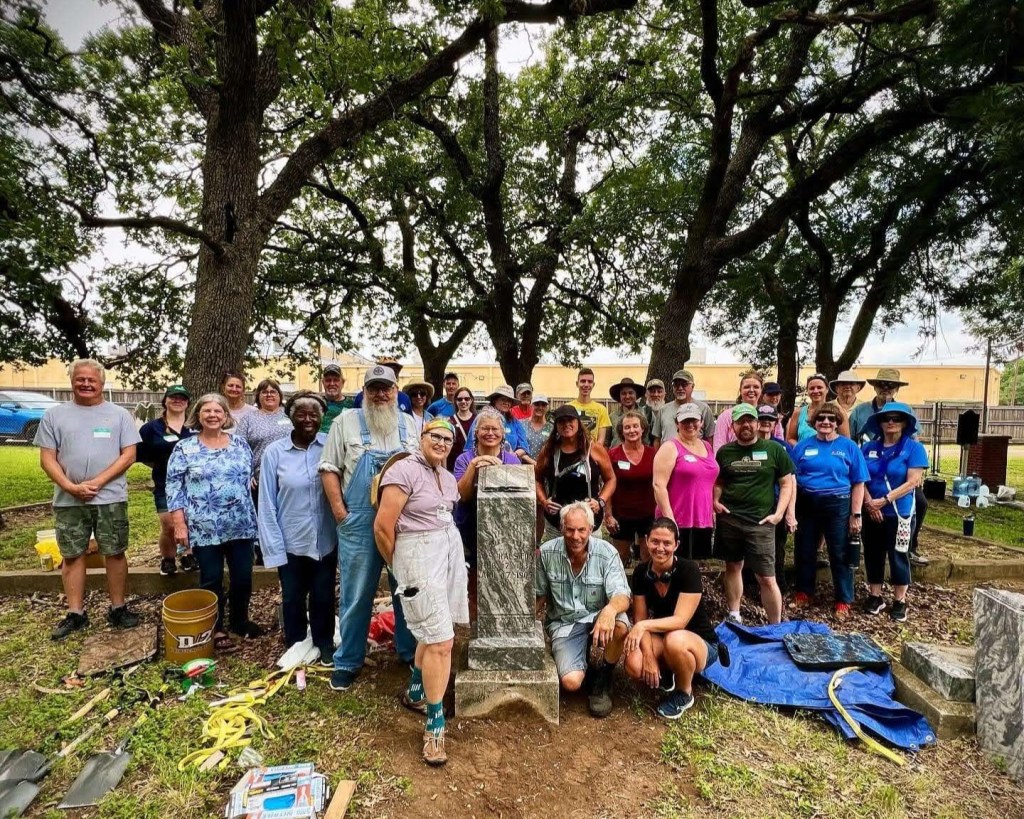
48StateTour attendees pose for group photos
Photo Credits: 48StateTour and Atlas Preservation
Jennifer and I had a picnic lunch at the cemetery, which is much less weird than you might think. The event helped rekindle my interest in local history and getting involved. I plan to buy a gallon of D/2 and cleaning supplies. I also want to know more about cemeteries. I started reading “Over My Dead Body: Unearthing the Hidden History of America’s Cemeteries” by Greg Melville. It’s fascinating stuff.
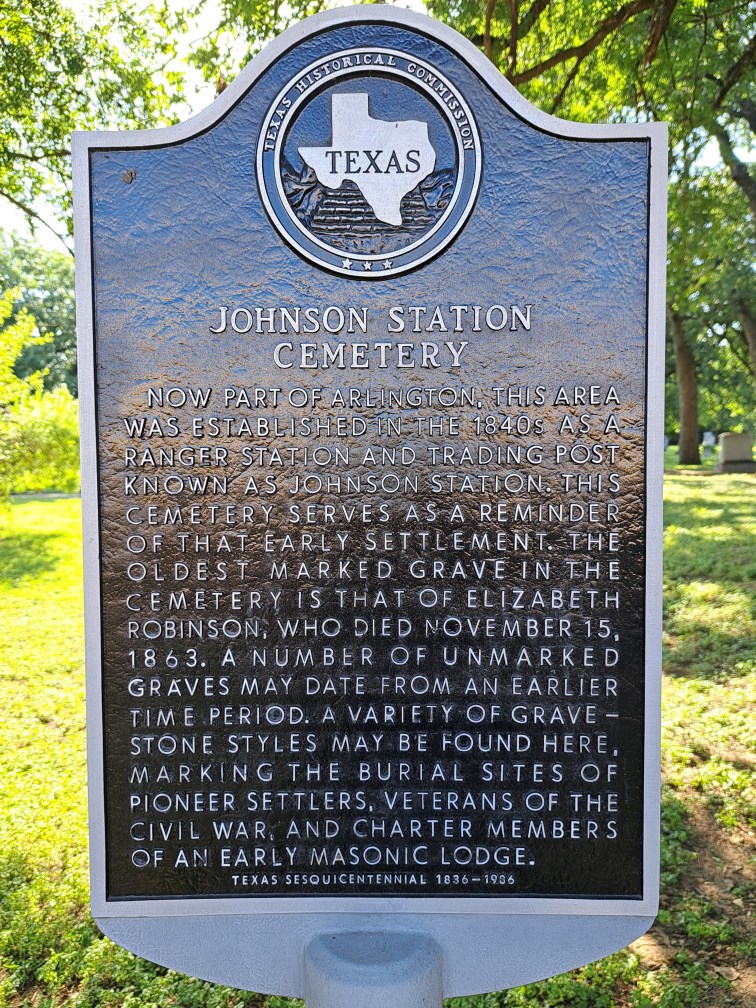
Johnson Station, now part of Arlington, was established in the 1840s as a ranger station and trading post. It was the first overnight stop for stagecoaches traveling between Dallas and Fort Worth. The cemetery’s oldest marked grave dates back to 1863, although some unmarked graves may be older. It’s one of the area’s earliest burial sites. Many pioneer settlers are buried there, including some Civil War Veterans. The cemetery is one of the last remnants of the Johnson Station community and an integral part of local history.
The 48StateTour, Atlas Preservation, and the workshop attendees did respectable preservation work. It was a successful day.
More info:
Blog post and photos by Jason S. Sullivan, 06-29-24
Photos Credits: 48StateTour and Atlas Preservation, where noted.
Preserve your local cemeteries!
 Jason S. Sullivan
Wow … so glad i happen to see your email drop. Did you ever give any consideration for taking my group on a tour of the Hill when we arrive in Sept 2024. Please call and we can discuss. Thanks, Telayo Standfield 770.329.8571.
Sent from Yahoo Mail for iPhone
LikeLiked by 1 person
Hi Telayo, I emailed you.
LikeLike
excellent article!
Lois Williams
LikeLiked by 1 person
Thanks, Lois! Glad you liked it.
LikeLike