In post-slavery America, Black people needed to go somewhere they felt safe. They searched for a place to raise their families, live their lives, and have the fellowship of a community. In Arlington, many found what they needed in The Hill—a neighborhood for the city’s Black residents. In February 2022, a trailer was released for a forthcoming documentary called “Echoes From The Hill,” exploring what life was like for its residents.
I’ve attended four of the five screenings and helped represent the Arlington Historical Society at each of them. (Although an avid supporter of the documentary, I’m not involved with it.) I look forward to seeing it again soon. At each screening, I learned different things about The Hill and Black history, and the panel discussions provided unique insight. It’s an important documentary and a story that needs to be told.
The Hill
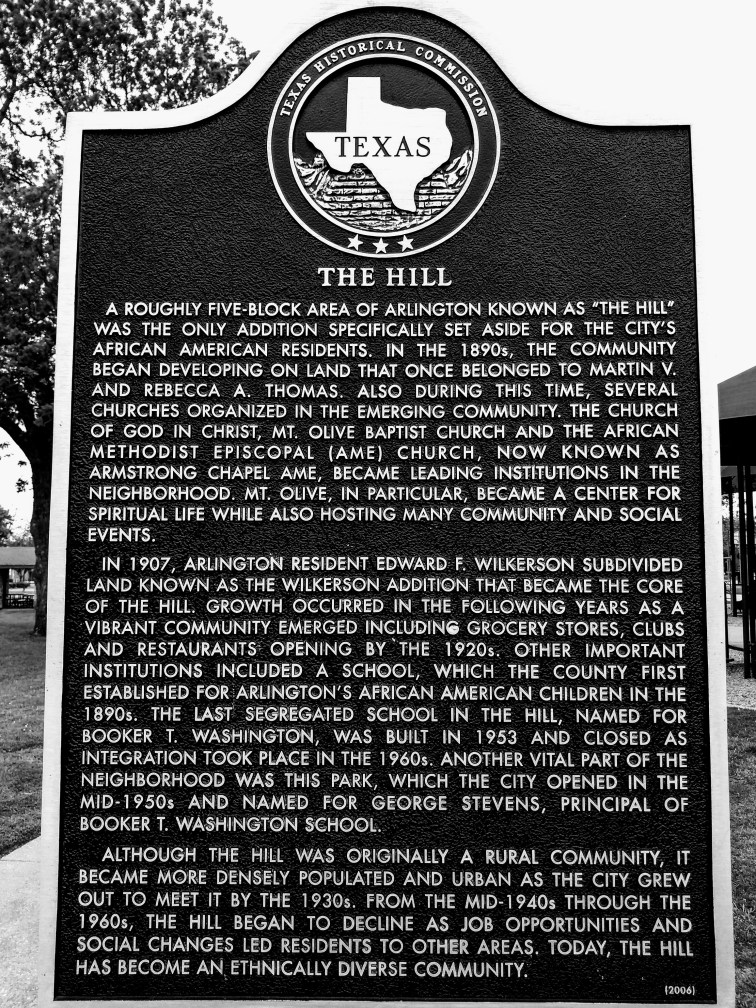
The Hill was a historic, five-block area of Arlington. Located northwest of the town’s original boundaries, its area included Sanford, West, Prairie, and Taylor streets. It was the only area designated for the city’s Black residents when racially segregated neighborhoods were prevalent. During 1890-1950, The Hill experienced its most significant growth and prosperity. A vibrant community emerged, with homes, schools, and churches co-existing with grocery stores, restaurants, and nightclubs.
By the 1930s, the area started to shed its rural character, becoming more densely populated and urban as Arlington expanded. Yet as Arlington began to change, so did The Hill. The area began to dissolve after World War II. When nearby farmland was subdivided for housing, it enticed some residents of The Hill to pursue other housing opportunities. Desegregation and other social changes eventually led residents to other areas, both in and out of Arlington, as Blacks could live in more places.
The neighborhood’s legacy is complicated and bittersweet. It serves as a proud example for the city’s Black residents, yet conversely, it is also a reminder of the nation’s bitter racism and segregation. Despite being recognized with a Texas Historical Marker in 2006, the story of The Hill has been largely untold until now.
“Echoes from The Hill” documentary

In February 2022, a trailer was released for a forthcoming documentary called “Echoes From The Hill.” The Arlington Tomorrow Foundation provided significant funding for the project. It was co-directed and co-produced by King Hollis and Lindell Singleton, who have extensive filmmaking experience. The Arlington Historical Society contributed photos and additional resources, while Fielder Museum served as one of the filming locations. AHS Executive Director Geraldine Mills is an associate producer of the documentary and appears on-screen in interviews.
“Echoes From The Hill” is an American story about a close-knit community that provided a safe and caring environment when people needed it most.
Two quotes from the documentary offer cornerstones of The Hill:
- “It was a safe place.” — Rev. Carl Pointer
- “It was just a community of love.” — Beverly Jackson
The document touches on three main parts of the community: church, education, and social life.
- Churches were the center of life; people received their strength from churches and their families. Mount Olive Baptist Church was the largest and most influential church in the community.
- Teachers and other faculty were held in high regard. They were invested in their students and wanted them to succeed. Opportunities were limited, though; area students had to attend the I.M. Terrell school in Fort Worth if they wanted to continue past an 8th-grade education.
- Lou Henry Taylor was often considered the matriarch of The Hill. She was an influential and smart businesswoman who supported schools, churches, and folks in the community. Lou’s Blue Lounge on Indiana Street was a popular spot for area nightlife.
The documentary premiered in June 2022 with a well-attended screening.
“Echoes From The Hill” premiere screening
— June 2022
The documentary is a planned five-part series. The first episode, “A Place of Our Own,” premiered on June 17, 2022, at the AISD Center for Visual and Performing Arts. It was part of the second annual Arlington Juneteenth Jubilee, a community-wide celebration with events and activities. Over 200 people attended the event, including Arlington Mayor Jim Ross.
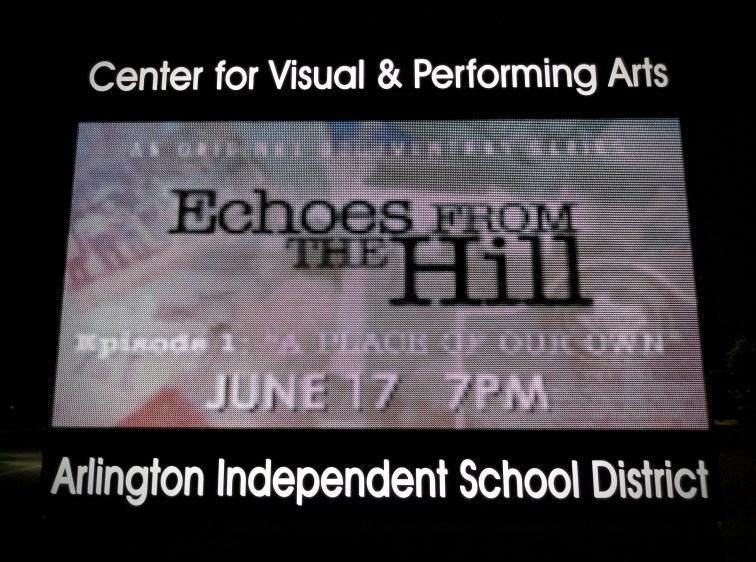
“Echoes From The Hill” screening
The program began with remarks from guest speakers.
Director Lindell Singleton introduced the documentary as a multi-part connected story. He added, “We live in a complicated world. Stories create a focused action for reconciliation.“
Director King Hollis remarked that he wanted to tell the truth about the residents of The Hill and that this film “takes you to church.”
Shirley Adams, Treasurer of the MLK Jr. Celebration Committee said, “This is a story that needed to be told.“
Geraldine Mills, Executive Director of the Arlington Historical Society, wanted to ensure that the filmmakers “told the story big because it is a big story.”
The documentary included interviews, personal stories of former residents of The Hill, photos, and reenactments interwoven with the historical context of slavery, segregation, and freedom towns. Other topics included the community, churches, schools, social life, and notable people.
In the documentary, The Hill is described as a place of love and appreciation, where folks supported each other and worked together. It wasn’t perfect, but people cared about each other—and most importantly, they felt safe. Education and the church were impactful parts of the community, as were small businesses. Some of the residents referred to the area as “L.A.”—or Little Arlington.
“What a tribute to Arlington,” Master of Ceremonies David Small remarked after the closing credits rolled.
Afterward, the filmmakers and special guests participated in a Q&A panel session. The audience wanted to know about The Hill, filmmaking, and how to support the film. The filmmakers announced their plans for the documentary to be a five-part series. Proceeds from this first episode will help finance the other four.
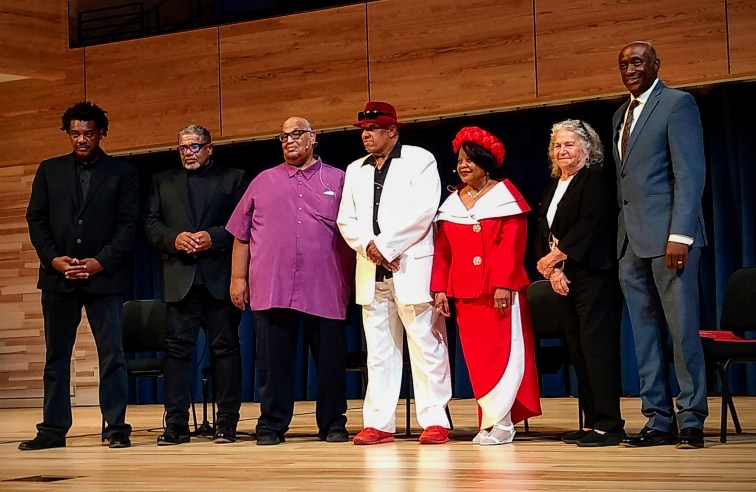
The group poses as the evening comes to an end.
From left to right – King Hollis, Lindell Singleton, Rev. Carl Pointer, Doug Taylor,
Beverly Jackson, Geraldine Mills, and David Small.
Everyone involved in the project was passionate about wanting to preserve the stories, as The Hill is a vital part of Arlington’s history. The filmmakers are professionals, and this was a well-done documentary.
Subsequent screenings of the documentary were held at UTA, the Denton Black Film Festival, the Modern Art Museum of Fort Worth, and the Arlington City Council Chambers. I’ve attended four of the five screenings.
“Echoes” screening at Denton Black Film Festival draws enthusiastic response
— January 2023
On January 27, 2023, the documentary was screened at the Denton Black Film Festival. The screening, a red-carpet affair held at Denton’s historic Campus Theatre, drew an audience of more than 100 people. It was a free screening for the community that included a Q&A panel discussion with the filmmakers and cast afterward.
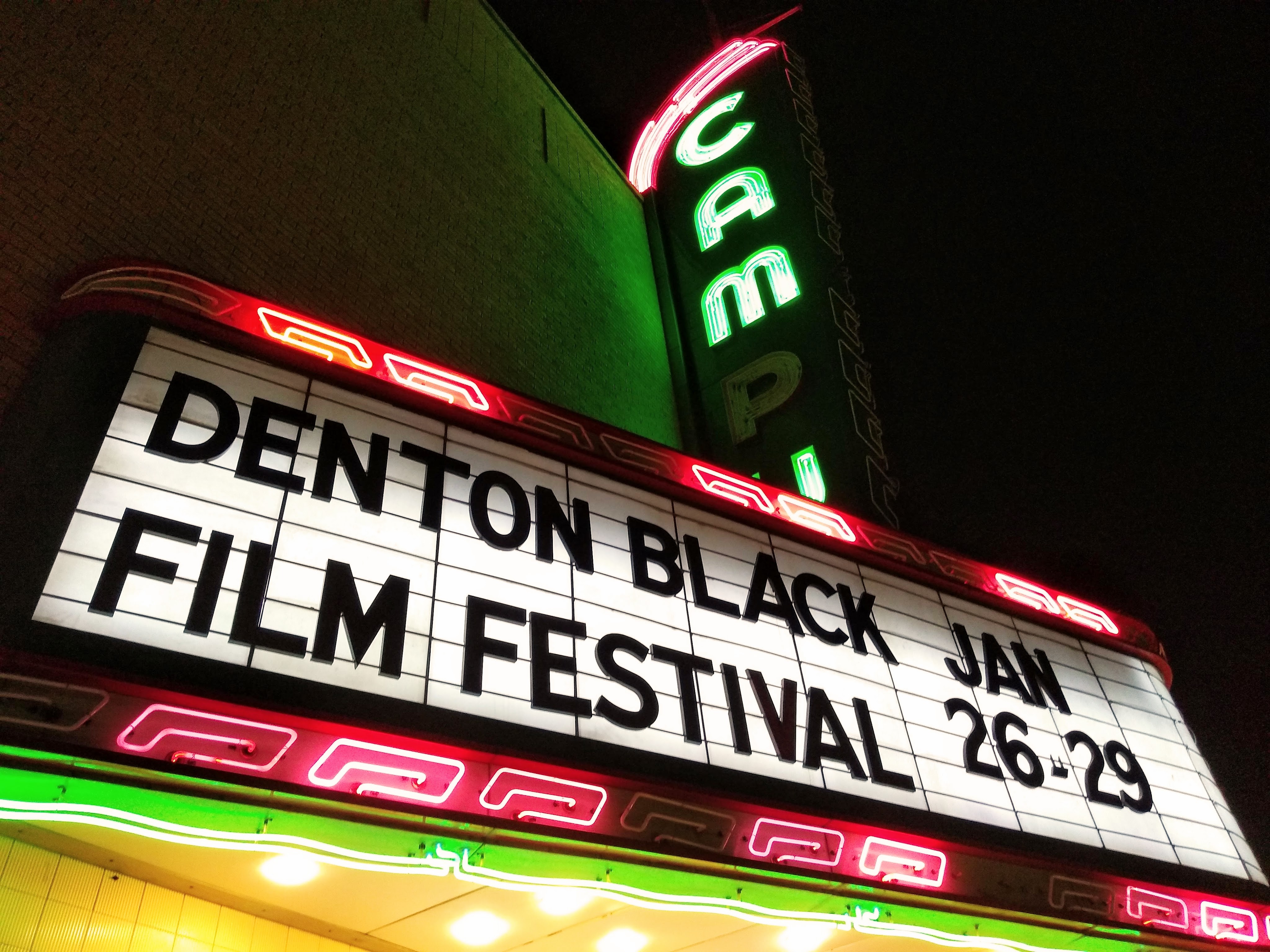
Denton’s Campus Theatre
For filmmaker King Hollis, who is from Denton, it was his first time screening a film in his hometown. During his 31-year career as a Black filmmaker, he said that seeing a cut of “Echoes From The Hill” was the first time he cried during one of his films.
During the evening’s introduction and Q&A panel session, several quotes resonated with me.
Lindell Singleton referred to these as “origin stories” and “uniquely an American story, a story about us.” He specifically recognized Geraldine Mills and her efforts on the project. He recalled how she went door-to-door in the neighborhood asking for photos, stories, and ephemera. He applauded her pioneering work gathering information and expressed gratitude for her efforts.
“African American stories must be told because they are American stories,” said King Hollis. He also remarked that The Hill was like other communities in the south and North Texas, expressing the need for Black people to “tell the world about us and each other about us.” There is also a need to “connect the dots and understand our own journey.“
Dr. Ed Gray, a sociologist who previously lived in Arlington, said that there were “a million ‘hills’ in America” and “a million stories to tell,” referring to The Hill and communities like it around the country.
Rev. Carl Pointer, one of the cast members, was born and raised in Arlington. “It’s a human story,” he said. He expressed his sentiments of Black joy and Black resilience. He told a story of how his father only completed the 8th grade, as the AISD (and many other districts) didn’t provide further educational opportunities for Black students until desegregation laws made it mandatory. His daughter, though, earned a doctorate, fulfilling opportunities that weren’t available just a short time ago.
Denton’s Mayor Gerard Hudspeth said it was “hard to watch, honored to watch it,” referring to the struggles of the Black community.
Audience members in the Q&A session asked about various topics, including where the filmmakers got the stories, the transformation of The Hill, and what the area is like today. The audience received the documentary with enthusiasm.
About the Denton Black Film Festival
The 2023 Denton Black Film Festival was held January 26-29 in person and extended virtually through February 5. The festival included events celebrating Black cinema, music, spoken word, art, and more. It featured nearly 100 films, mostly documentaries, ranging from local stories to broader topics. The festival held events and screenings at various venues around Denton. More info is available at www.dentonbff.com.
Intimate screening of “Echoes” at the Modern Art Museum of Fort Worth
— April 2023
On April 27, 2023, the Modern Art Museum of Fort Worth hosted a screening of “Echoes From The Hill.” Like previous formats, the event included a documentary screening and a panel discussion with cast members. What made this screening different, and perhaps even more memorable, was the smaller audience. Only about 30 people attended, giving it a more intimate feel. The intimacy carried over into the panel discussion afterward, with the panel focusing more on sharing personal stories about their experiences than answering audience questions.

Panel discussion at Fort Worth screening
Even with the panel’s more personal nature, questions from the audience included two that I’ve heard at each screening: Why was it called The Hill, and what is The Hill like today?
One of the cast members, Rev. Carl Pointer, shared some insight about the community’s name. He explained that as you drive north on West Street, there is a dip in the road as you go under the railroad tracks on the West Street Bridge. As you go under the bridge, there is something of a hill to climb, although it is very brief. Nonetheless, the area would have been near the boundaries of The Hill. Even though the hill he’s referring to is ever-so-slight, it is the most plausible explanation I’ve heard regarding the name. It would have been much more sparsely populated (with both people and things) than it is now. The landscape would have looked much different then, with possibly more of a noticeable hill. He also noted that folks may have used the name to geographically identify the area, such as “on the hill” or “near the hill.”
I haven’t heard a satisfying response to what The Hill is like today. While I don’t live there, I have walked and driven through much of the area. At one screening, a cast member replied that The Hill no longer exists. I slightly disagree; people still live there, and the area has a school, city park, and historic churches. Today, it seems more like a neighborhood than a community, though. The most significant difference is that the area is no longer physically segregated from Arlington; it’s now part of Arlington. Perhaps it no longer exists in that regard. It was never a large area, but being absorbed into Arlington makes it feel even smaller and less segregated. The area has a vibrant history and is undoubtedly worthy of being officially recognized as a historic district.
After the screening, event organizers handed out film posters as a memento. I donated mine to Fielder Museum, where it’s displayed in our Black History exhibit. It’s alongside our Lou’s Blue Lounge and Dragnet Club posters, two popular nightclubs formerly on Indiana Street in The Hill.
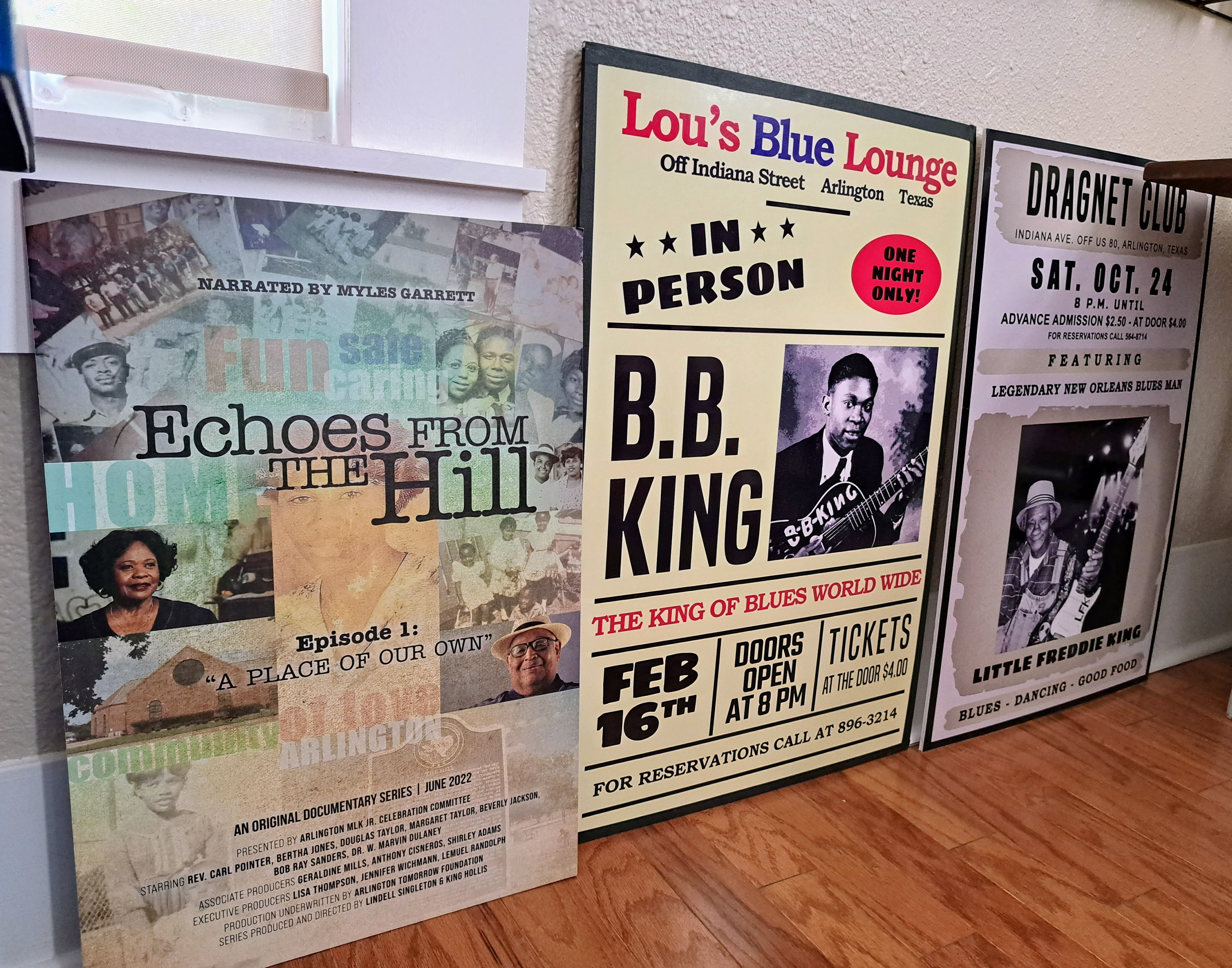
Echoes From The Hill, Lou’s Blue Lounge, and Dragnet Club
“Echoes” screening held at Arlington City Council Chambers
— February 2024
On February 1, 2024, the Arlington City Council Chambers hosted a screening. It was the beginning of Black History Month and the first event held for Arlington’s Parks and Recreation Centennial Celebration. Like previous formats, the event included a screening and a panel discussion. About 75 people attended the event. It was a diverse crowd, including a fair amount of younger people. A few of the cast members were also in attendance.
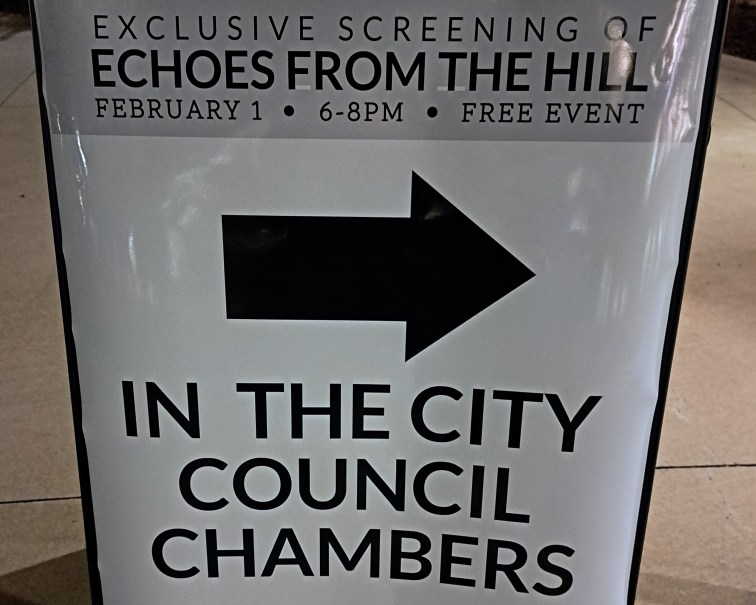
“Echoes From The Hill” at the Arlington City Council Chambers
The panel discussion was different this time, as it included leaders from the community and not cast members. The panel included Dr. Barbara Odom-Wesley – City Council District 8, Lemuel Randolph – Deputy City Manager, and Lisa Thompson – MLK Executive Committee Chair. Topics included community, resilience, leadership, struggles, diversity, commonality, personal experiences and stories, mentors, local government, inclusivity, education, and family.
This screening, especially the panel discussion, made me appreciate (even more so) that many of the struggles for the Black community still linger today, even decades after The Hill and the 1960s Civil Rights Movement.
The most surprising thing that I learned from the documentary involved education. When schools were segregated, Black teachers were heavily invested in their students because they knew the importance of education. Many of the teachers were also highly educated in their chosen fields. Yet, as employment opportunities were limited for Black professionals, many became educators, and students benefitted from it. Black teachers served as role models for their students, becoming mentors.
With integration, not only were the students integrated, but so were the teachers. Now, you had white teachers teaching Black students and Black teachers teaching white students, which had negative repercussions. The white teachers weren’t as invested in the Black students—who also lost their mentors—and the mixed classrooms offered abundant distractions related to racism. In some ways, the segregation of the classrooms made things worse. It’s something I learned from the documentary that I was definitely not taught in school.
More info
Visit the documentary’s website to learn more about the film, including behind-the-scenes photos, additional content, and upcoming screenings.
“Echoes From The Hill” – Cast and Crew:
Directed by:
- King Hollis
- Lindell Singleton
Written by:
- Lindell Singleton
Featuring:
- W. Marvin Dulaney
- Cecelia Gilbreath
- Beverley Jackson
- Geraldine Mills
- Randy Parker
- Carl Pointer
- Gene B. Preuss
- Bob Ray Sanders
- Douglas Taylor
- Margaret Taylor
Behind-the-scenes photos:
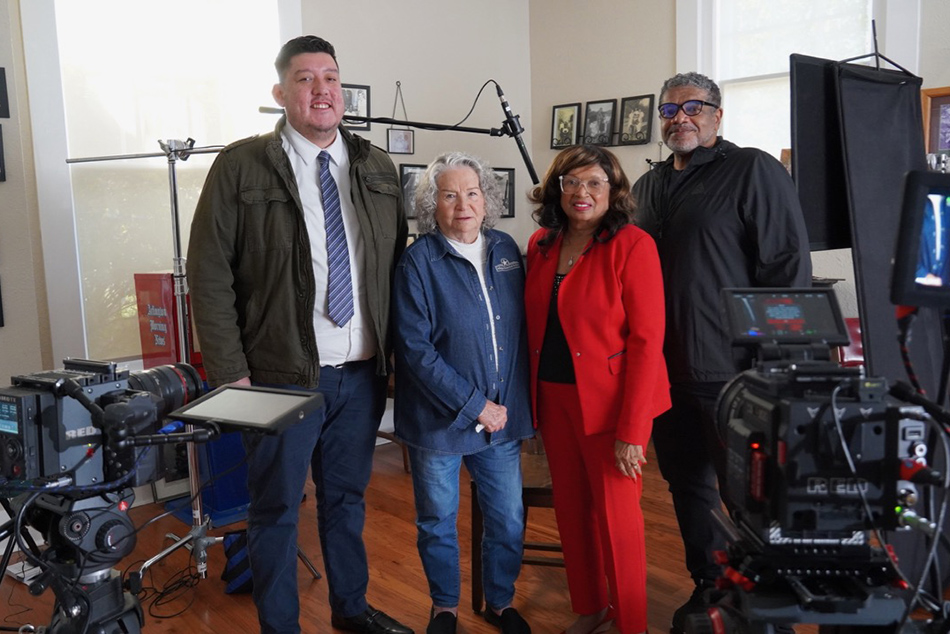
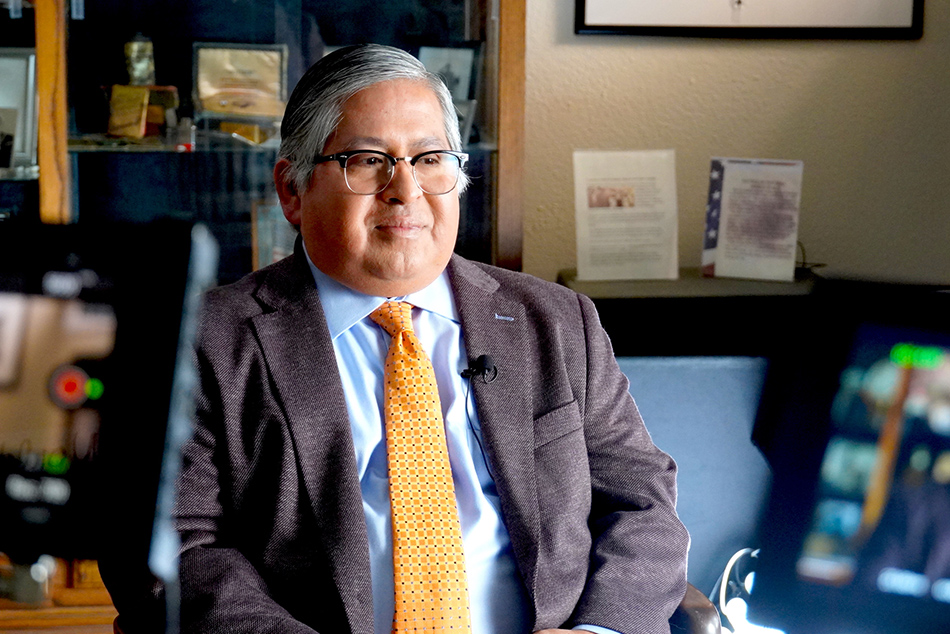

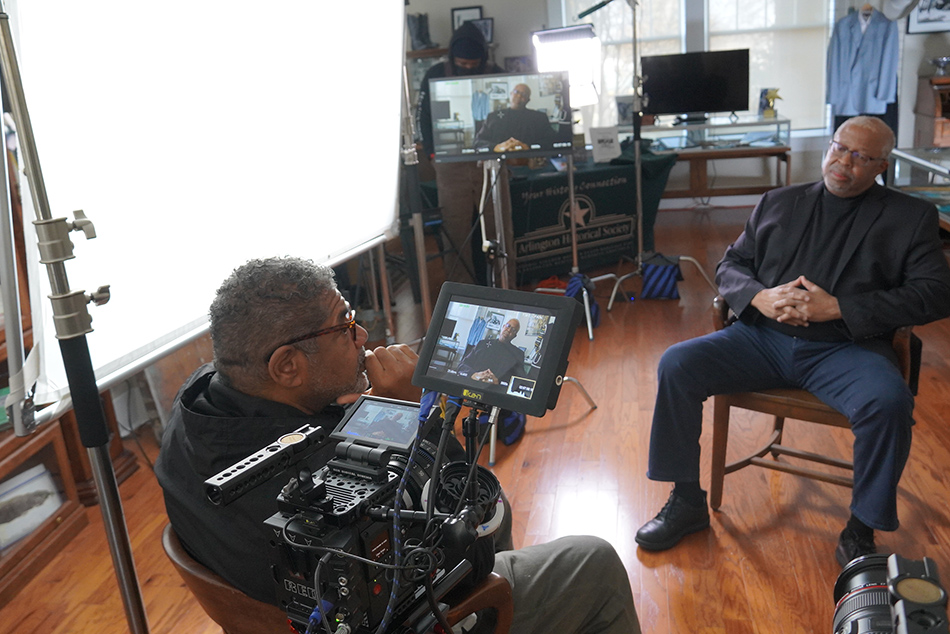


Photo Credits: City of Arlington website
Photos (from top-left):
- Anthony Cisneros, Geraldine Mills, Shirley Adams, and Lindell Singleton pose for a photo
- University of Houston professor Dr. Gene Preuss being interviewed
- Rev. Carl Pointer poses for a photo
- Director Lindell Singleton interviews former UTA professor Dr. Marvin Dulaney
- Journalist Bob Ray Sanders being interviewed
- Longtime resident of The Hill, Beverly Jackson, responds to an interview question
Early advertisement / call-to-action

Official trailer
Blog post and photos by Jason S. Sullivan, 01-28-23 (updated 07-04-24)
 Jason S. Sullivan